What changed
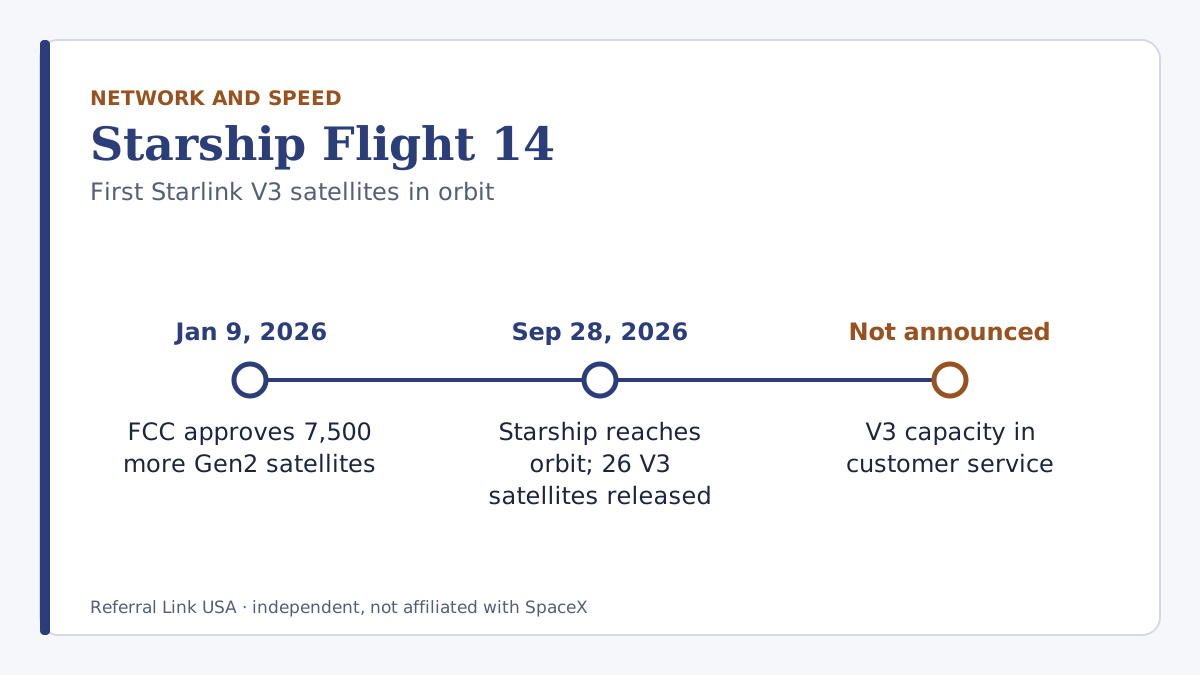
On its 14th integrated test flight, SpaceX’s Starship reached orbit for the first time and released 26 Starlink V3 satellites. Until now every Starlink satellite in service reached orbit on a Falcon 9 rocket, and the satellites launched that way are the smaller V2 Mini design. TelecomTV quotes SpaceX’s post after the flight: “All 26 Starlink V3 operational satellites deployed and operating nominally.”
The press reports give these numbers for each V3 satellite: about 1 terabit per second of downlink capacity and 160 gigabits per second of uplink, with 2,048 beams each way. Drive Tesla Canada reports SpaceX’s view that a fully loaded Starship could one day carry 60 V3 satellites, adding roughly 20 times the network capacity of a typical Falcon 9 Starlink launch. Those are SpaceX’s design figures as reported, not measured customer speeds.
When
The flight lifted off from Pad 2 at Starbase, Texas, on Monday, Sep 28, 2026 (Booster 21 and Ship 41), per Drive Tesla Canada’s report published the same day. TelecomTV’s report is dated Sep 29, 2026. TelecomTV says customer service on the new satellites is expected within a few weeks, pending testing; SpaceX hasn’t published a date we can cite.
Who is affected
Nobody’s plan, price or referral changes because of this launch. It matters indirectly to anyone waiting on capacity: households in areas where Starlink has limited sign-ups or charges extra because a cell is full, and existing customers on busy evenings. It does not change anything for referrers or for the new customer’s free month.
What it means for you
For referral purposes, nothing moves. The referral terms, the $100 example reward, the free month on the second bill and the two-billing-cycle stay are all set by Starlink’s terms and help pages, not by the satellite fleet. What capacity can change over time is where Starlink is willing to take new customers. A friend who sees “sold out” or a demand surcharge at their address today can only be referred once Starlink opens sign-ups there, and that decision is Starlink’s.
It is also one launch. Twenty-six satellites is a small addition to a fleet that Broadband Breakfast described in January as already having more than 5,000 Gen2 satellites in orbit. Any effect on your own speeds will depend on many more launches and on how Starlink assigns the new capacity.
What to do now
Nothing is required. If a friend was told their address is full, they can re-check availability on starlink.com from time to time; if it opens and they want service, they order on starlink.com with your link before checkout, as usual. If you’re an owner, keep sharing within the sharing rules; launch news doesn’t change them.
What stays the same
Plans, prices, the referral reward, the referee’s free month, the same-country rule, and the requirement to order on starlink.com with the link are all unchanged by this event.
What we don’t know yet
When V3 satellites start carrying customer traffic, which regions get the capacity first, whether Starlink will reopen any sold-out US areas as a result, and how many more Starship launches carrying V3 satellites will follow and when. We will not guess at any of these.
How to check it yourself
For launch facts, SpaceX’s own posts and the reports we cite are the primary record. For anything that affects you, the place to check is your own address on starlink.com: the order page shows whether service is available, what it costs and whether a demand charge applies. If a friend’s address was full before, that page is the only reliable test of whether it has opened; launch news alone doesn’t tell you.