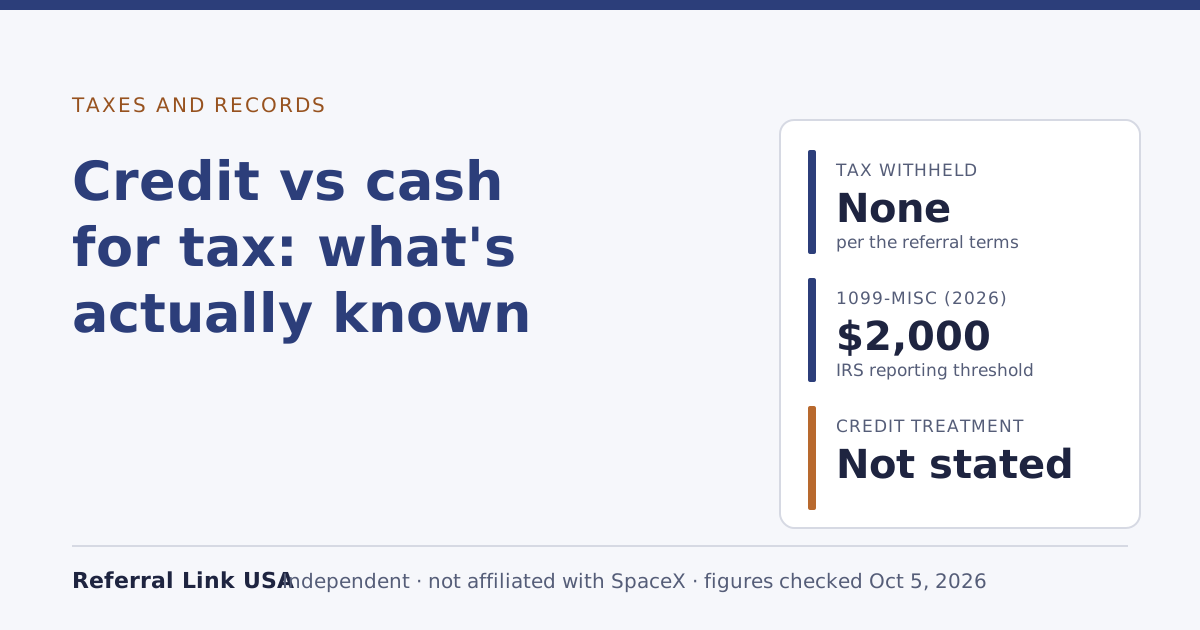
Nobody has stated how Starlink referral credit is treated for tax, compared with cash. Starlink’s terms treat both the same way: same value, no tax included or withheld, and the decision about whether tax is owed left to you. The IRS’s general rule is that all income is taxable unless the law specifically excludes it, and we found no IRS page that addresses referral service credits. So “credit is tax-free” is an assumption, not a rule. Keep records of both, and ask a tax professional.
This guide sets out exactly what’s stated, the IRS concepts people point to and why none of them settles the question, and what to bring to a preparer. It isn’t tax advice.
What Starlink’s terms say
Four statements, all from the Referral Program Terms (republished Oct 3, 2026) or the help center:
- Same value. Credit and cash are the same value.
- No tax handled. In full:
“Rewards are calculated and issued in local currency, exclusive of taxes. SpaceX is not responsible for any taxes, duties, or other governmental charges arising from or in connection with any Reward. The Referrer is solely responsible for any tax liability associated with receipt of a Reward (including the determination of whether such tax liability exists), for issuing any invoice or tax document required under local law, and for making any necessary filings with the relevant tax authorities.”
- Not wages. The terms call rewards promotional incentives, not wages, salary or commissions. That label describes the reward; it doesn’t by itself decide how the IRS treats it.
- No distinction between credit and cash. The tax paragraph says “any Reward”. Credit and cash are both Rewards.
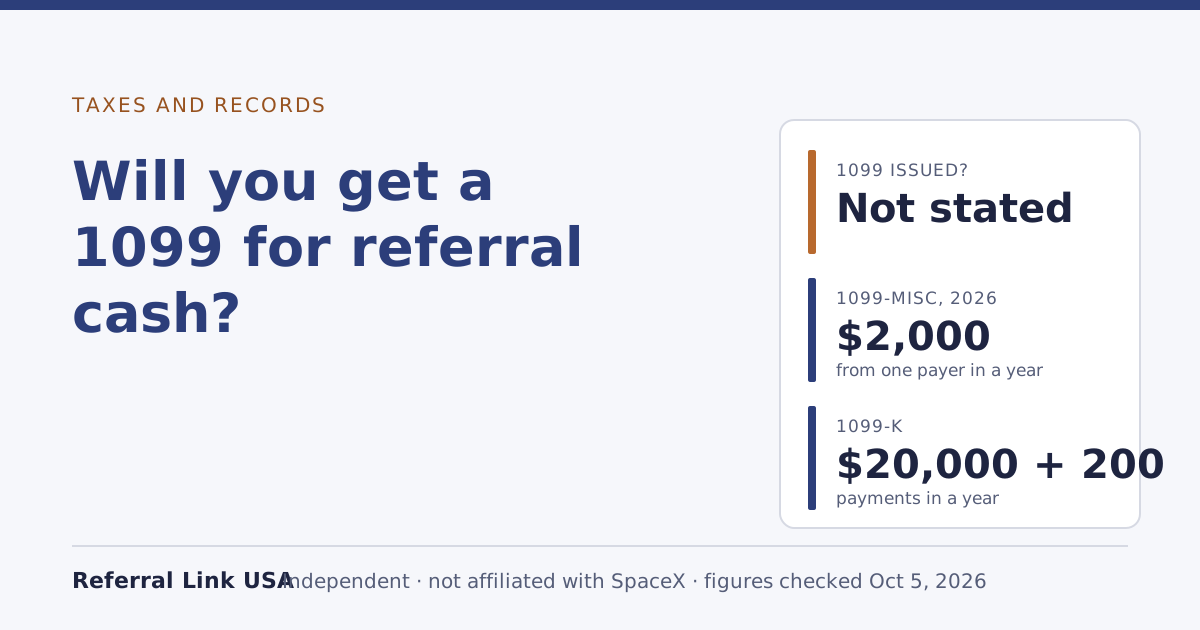
What’s missing: how service credits on your own bill are treated for taxunverified, and whether SpaceX or its payment processor issues a Form 1099 for referral cashunverified. Both are unverified in our data file because no source states them.
Credit and cash, side by side
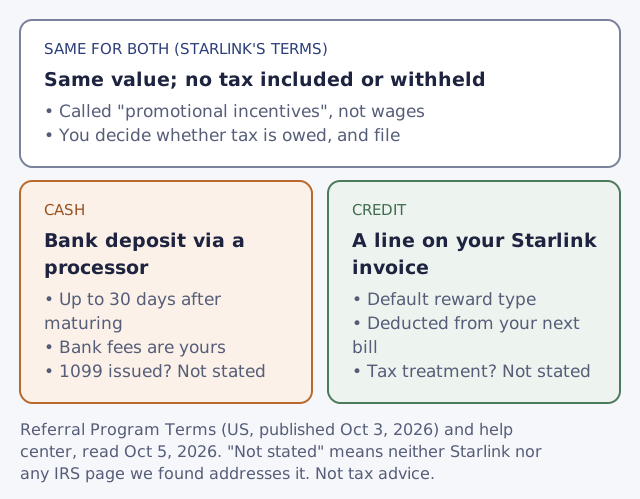
| Cash | Credit | |
|---|---|---|
| Value | $100 (US example) | Same value |
| How it arrives | Bank deposit through SpaceX’s payment processor | Deducted from your next Starlink invoice |
| Timing | Up to 30 days after the referral matures | On a future invoice after it’s issued |
| Tax withheld | None | None |
| Form 1099 | Not stated | Not stated |
| Tax treatment | Your determination, per the terms | Not stated anywhere we found |
The IRS concepts people reach for
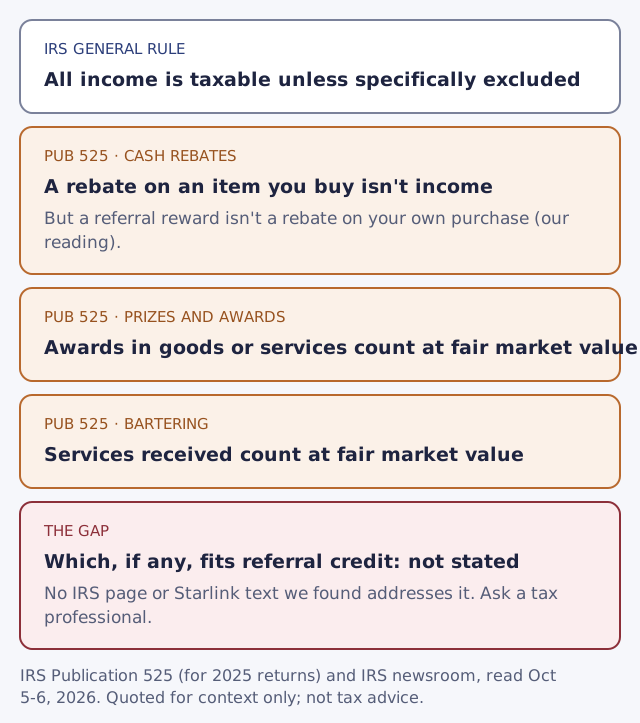
The general rule
The IRS says: the IRS says all income is taxable unless the law specifically excludes it. That’s the starting point. The question for referral credit is whether it’s “income” at all, and if it is, whether anything excludes it.
The rebate argument
The most common argument for credit being tax-free compares it to a rebate. IRS Publication 525 does say rebates aren’t income:
“Cash rebates. A cash rebate you receive from a dealer or manufacturer of an item you buy isn’t income, but you must reduce your basis by the amount of the rebate.”
The key words are “of an item you buy”. A rebate is a price reduction on your own purchase. A referral reward is paid because someone else bought something. Our reading: the rebate rule is an imperfect fit, and we wouldn’t rely on it without a professional’s view.
Prizes and awards
Publication 525 says prizes and awards “in goods or services must be included in your income at their FMV” (fair market value). Its examples are contests and drawings. Whether a referral reward is an “award” in this sense isn’t something Pub 525 addresses.
Bartering
Pub 525 also says that in bartering, “you must include in your income, at the time received, the FMV of property or services you receive”. Some people see referral credit as services received in exchange for an introduction. Others note the terms say rewards are “not … compensation for services”. Neither view is settled by anything we can cite.
Timing: when is something “received”?
If tax applies, timing could matter, especially for rewards that arrive around New Year. Pub 525 describes “constructively received income”: “If you’re a cash-method taxpayer, you’re generally taxed on income that is available to you, regardless of whether it is actually in your possession.” How that applies to a credit sitting on a future invoice, or a cash payment issued in December and deposited in January, is a question for a preparer. Your log of issue and deposit dates is what they’ll need.
Reporting thresholds are not the same as taxability
Two IRS thresholds come up in referral discussions:
- Form 1099-MISC: for prizes, awards and other income, $2,000 paid to one person in 2026, per the IRS instructions.
- Form 1099-K: Form 1099-K from a payment processor only above $20,000 and more than 200 transactions in a year.
These decide whether a payer files a form. They don’t decide whether income is taxable; the IRS’s general rule doesn’t have a threshold. At Starlink’s US example of $100 per referral, the 1099-MISC threshold would take twenty rewards from one payer in a year. Most owners will never get near it, which is exactly why “no form arrived” shouldn’t be read as “nothing to consider”.
A worked example
You referred three people in 2026. Two rewards paid as credit (in June and September), one as cash (deposited December 18), each $100 per your account.
- What you know: $300 in total value; $200 as invoice credits, $100 as a deposit; no tax withheld on any of it; probably no 1099, since you’re far below the 1099-MISC threshold (whether one is issued at all isn’t stated).
- What you don’t: whether the $200 of credit is treated the same as the $100 of cash.
- What to do: bring the log, the invoices showing the credits, and the bank statement showing the deposit to whoever prepares your return, and ask the questions below.
Questions to bring to a tax professional
- Are referral rewards paid as cash reportable income for me, and where would they go on my return?
- Is service credit on my own bill treated differently from cash? Does the rebate rule apply, or not?
- Does it matter that the terms call rewards “promotional incentives” and “not wages, salary, commissions, or compensation for services”?
- For a reward issued in one year and received in the next, which year counts?
- If I switch between credit and cash, do I need separate records?
- Does my state treat this differently? (Not stated anywhere we found.)
Records that make the answer easy
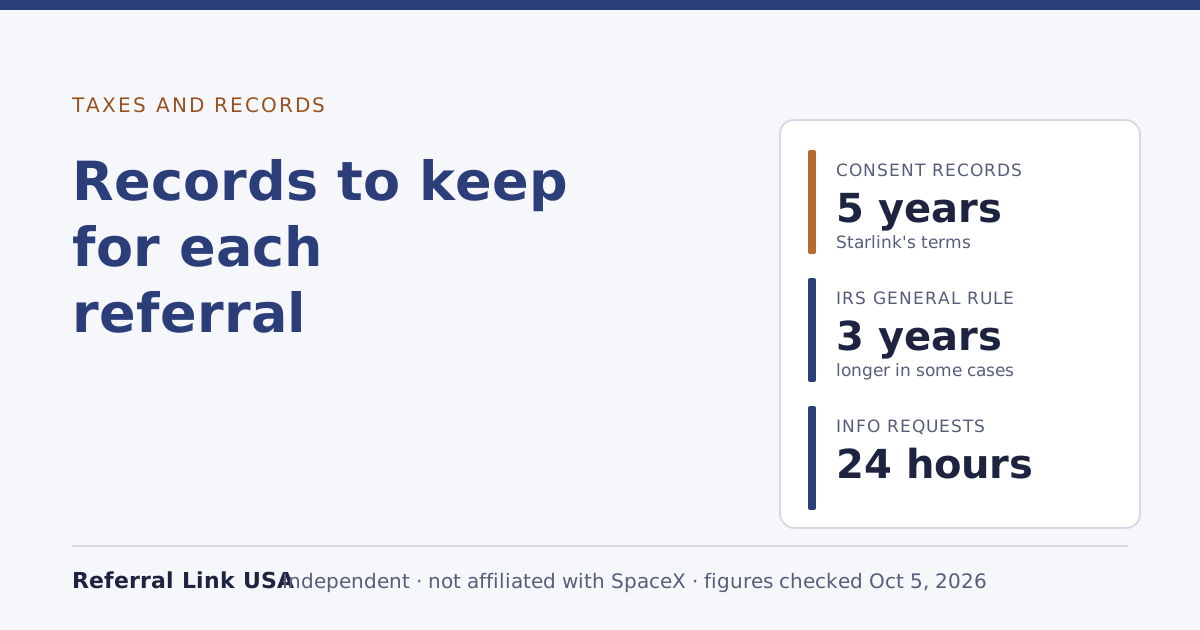
Whatever the answer, it depends on dates and amounts you’ll want to have. For each reward: the date issued, the amount your account shows, whether it was credit or cash, the invoice or deposit where it appeared, and any bank fee (those are yours: any fee your bank charges to receive the payment is yours to pay). Records to keep for each referral has a copyable log. The IRS’s general guidance is to keep tax records for three years, longer in some situations.
Why this page doesn’t give you an answer
Because no source we can cite gives one, and a confident guess here could cost you more than the reward is worth. This site’s rule is that anything Starlink or the IRS doesn’t state is marked “not stated”, and our own readings are labeled as ours. On this question, the honest summary is short: cash and credit are the same value, the terms treat them the same, the IRS starts from “all income is taxable unless excluded”, and nobody has published how referral credit fits. A tax professional who sees your whole return is the right person to decide. The editorial policy explains how we label facts and when we update them.
Common mistakes
- Assuming credit is automatically tax-free. Not stated.
- Assuming no 1099 means no income. Thresholds are about forms, not taxability.
- Choosing credit to avoid tax. Nothing supports that, and the terms treat both the same.
- Throwing away invoices. Credit only shows up there.
- Taking a forum post as tax advice. Including this page.
What we don’t know
As of our Oct 5-6, 2026 checks: how referral service credit is treated for federal or state tax; whether SpaceX or its payment processor issues a 1099 for referral cash; and whether the processor will ask for a taxpayer identification number. We’ll update this page and the taxes page if any of that is published.
What to do next
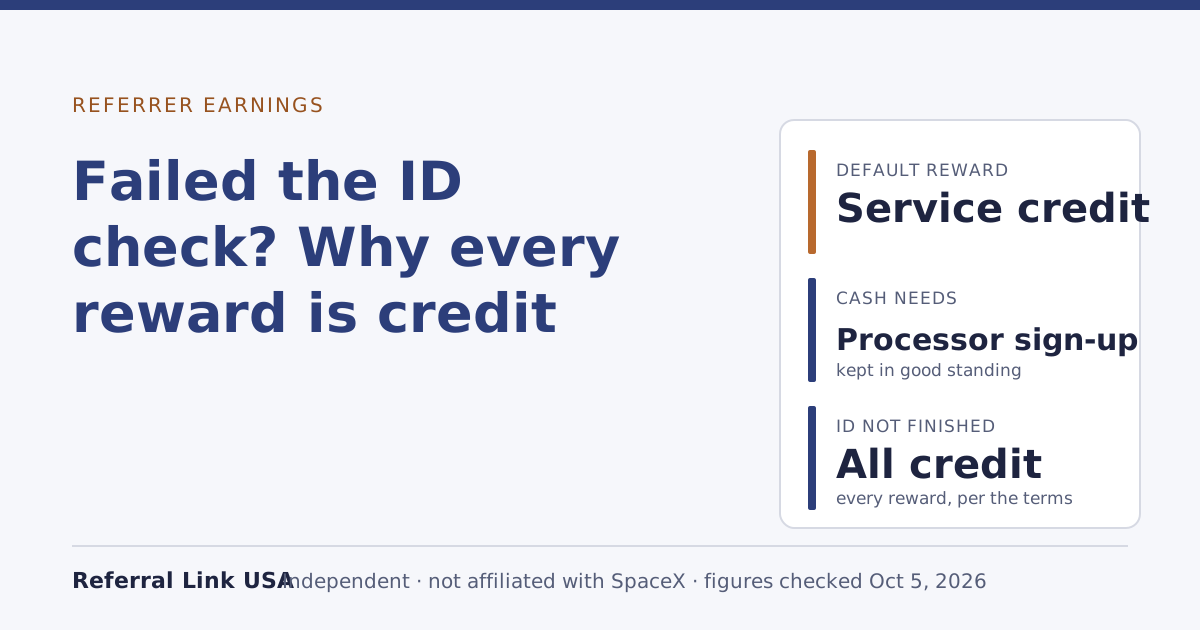
- Choosing between credit and cash? See credit or cash for timing, and why every reward can become credit for the processor step.
- Start your records: records to keep for each referral.
- The cited basics: Starlink referral taxes and 1099s and the glossary entry for Form 1099.