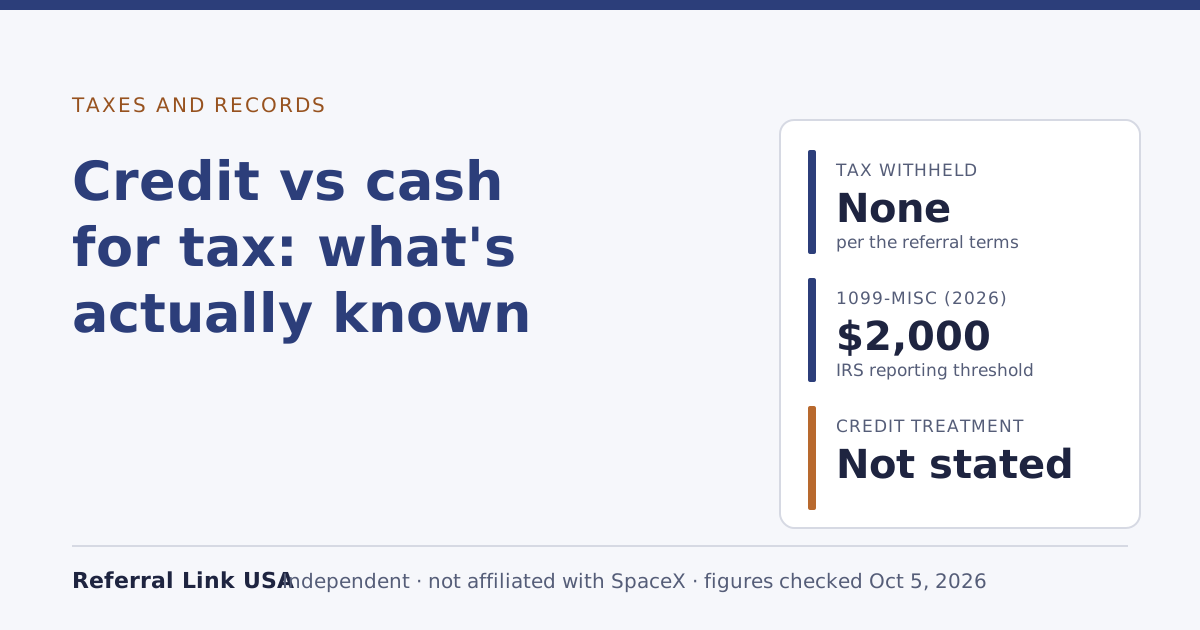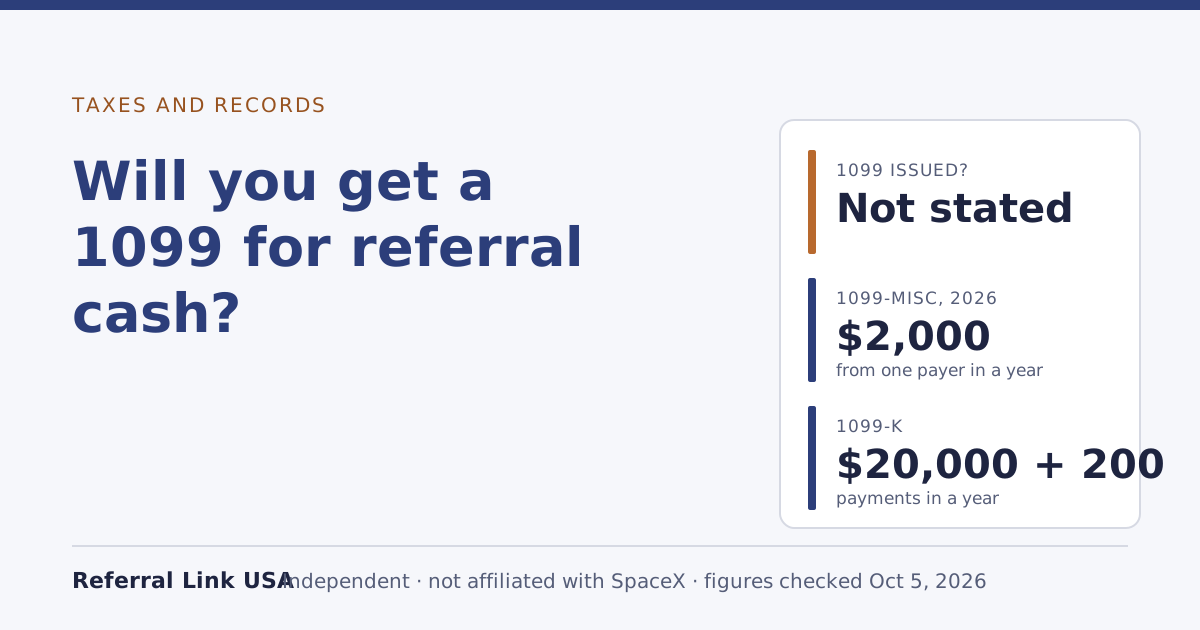
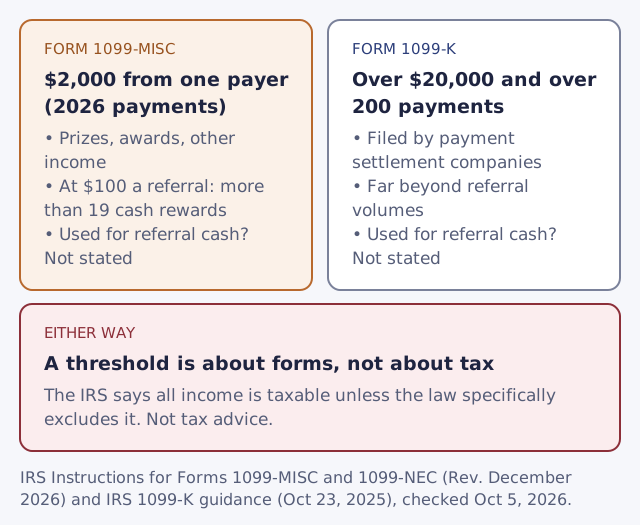
Nobody has said whether a Form 1099 is issued for Starlink referral cash. The referral terms leave tax entirely to you and don’t mention any form, and the help center is silent too. If a form were issued, the likeliest is a 1099-MISC, and for payments made in 2026 that only applies once one payer has paid you $2,000; at $100 a referral, that’s more than 19 cash rewards. A 1099-K from a payment processor needs over $20,000 and more than 200 payments. Either way, not getting a form doesn’t decide whether the money is income.
This is cited information, not tax advice. Below: what the terms say, the two forms that could apply, how the thresholds work at referral volumes, and what to do whichever way it goes.
What Starlink’s terms say
The referral terms put the whole question on you:
“Rewards are calculated and issued in local currency, exclusive of taxes. SpaceX is not responsible for any taxes, duties, or other governmental charges arising from or in connection with any Reward. The Referrer is solely responsible for any tax liability associated with receipt of a Reward (including the determination of whether such tax liability exists), for issuing any invoice or tax document required under local law, and for making any necessary filings with the relevant tax authorities.”
In short, rewards come with no tax included or withheld, and the referrer alone decides whether tax is owed and files anything required. The terms also say the terms call rewards promotional incentives, not wages, salary or commissions. And on the question this page is about, the honest status is: whether SpaceX or its payment processor issues a Form 1099 for referral cashunverified. We could find no Starlink text that answers it.
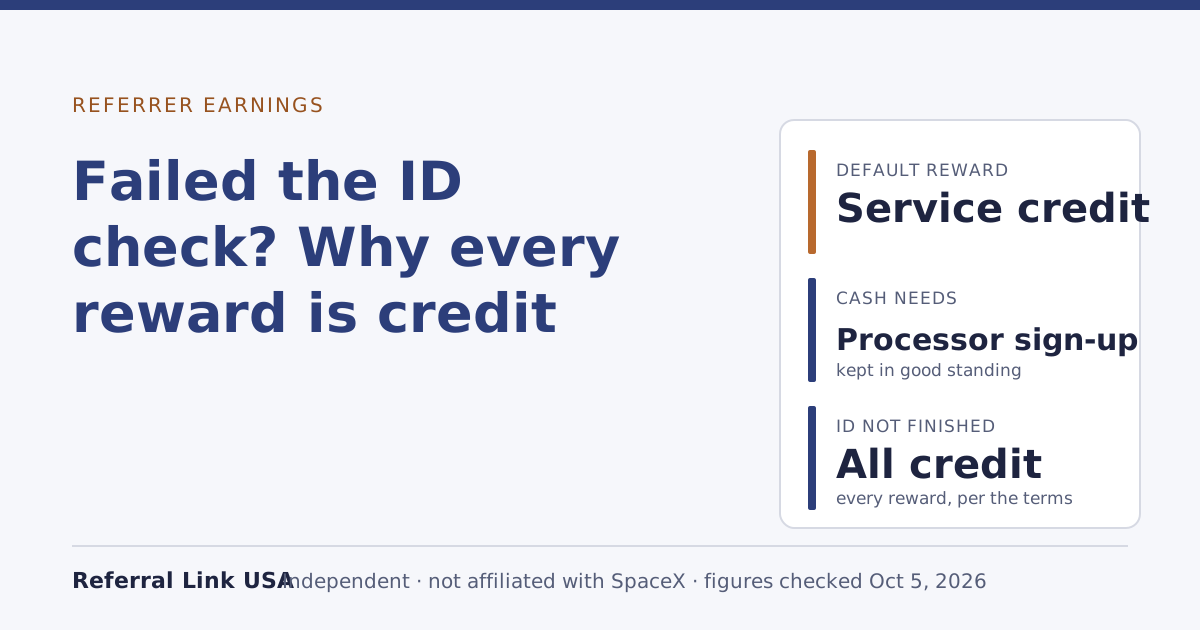
The cash itself goes through a third party: cash needs registration with SpaceX's chosen third-party payment processor, kept in good standing, and the terms don't name the payment processorunverified. That matters, because the company that pays you is usually the one that would file any information return.
The two forms that could apply
Form 1099-MISC
This is the form a business typically uses for “other income”, including prizes and awards. The IRS instructions in force for 2026 payments set the threshold: $2,000. The IRS’s general “About Form 1099-MISC” page, as we read it on Oct 6, 2026, still lists the older $600 figures; the newer instructions, which cite the 2025 law, are the ones that apply to payments made in 2026. Our news section has a dated post on the threshold change.
At $100 a reward, a single payer would need to pay you more than 19 cash rewards in 2026 to reach the threshold. Most referrers never get close.
Form 1099-K
This form comes from payment settlement companies. The current rule: Form 1099-K from a payment processor only above $20,000 and more than 200 transactions in a year. Referral cash would have to reach a scale far beyond what the terms describe as “voluntary and occasional” participation. A dated post in our news section covers the 2025 change back to these figures.
A worked example
Hypothetical: in 2026 you receive five cash rewards ($100 each, so $500) and two rewards as service credit ($200 of credit on your Starlink bills).
- Cash received: $500 from one payer. Below the $2,000 1099-MISC threshold, so even if the payer uses that form, it wouldn’t be required to file one for you.
- 1099-K: nowhere near $20,000 and 200 transactions.
- Credit: whether it’s reportable or taxable isn’t stated; how service credits on your own bill are treated for taxunverified.
- What that settles: only that a form is unlikely. It doesn’t settle whether the $500, or the $200 of credit, is income for you. The IRS says the IRS says all income is taxable unless the law specifically excludes it.
Thresholds are about forms, not about tax
This is the point people most often miss. A reporting threshold tells a payer when it must file an information return. It doesn’t make smaller amounts tax-free. The IRS position is the general rule above, and the referral terms say the decision about tax liability is yours. Our credit vs cash for tax guide covers the question of whether rewards are income in more depth; this page is only about paperwork.
If the payment processor asks for your tax ID
When you register for cash, the processor may ask for identification, and possibly a taxpayer identification number. The terms don’t list what it collects, only that if you don't finish the processor's identity checks, every reward is paid as credit.
The IRS describes Form W-9 as the way you give your correct taxpayer ID “to the person who is required to file an information return with the IRS”. So a request for your ID is consistent with a payer that might file a 1099 if a threshold is reached. It’s not proof that a form will come. Only follow processor steps from the link in your Starlink Referrals area; the processor’s ID check covers what’s known.
If a 1099 arrives
- Check who sent it. The payer named may be the processor rather than SpaceX.
- Compare the total with your own log. Count the cash rewards that reached your bank in that calendar year.
- Look for timing differences. A reward issued in late December might be deposited in January. Note both dates in your log.
- Account for reissues and revocations. Cash that bounces because of wrong details or bank problems can be re-issued as credit instead, and a reward can be limited, delayed or revoked, even after it's issued, for fraud, abuse or a terms violation. Either can make a form’s total differ from what you expected.
- Ask before filing. If it doesn’t match, contact the payer named on the form, and talk to a tax professional.
If no 1099 arrives
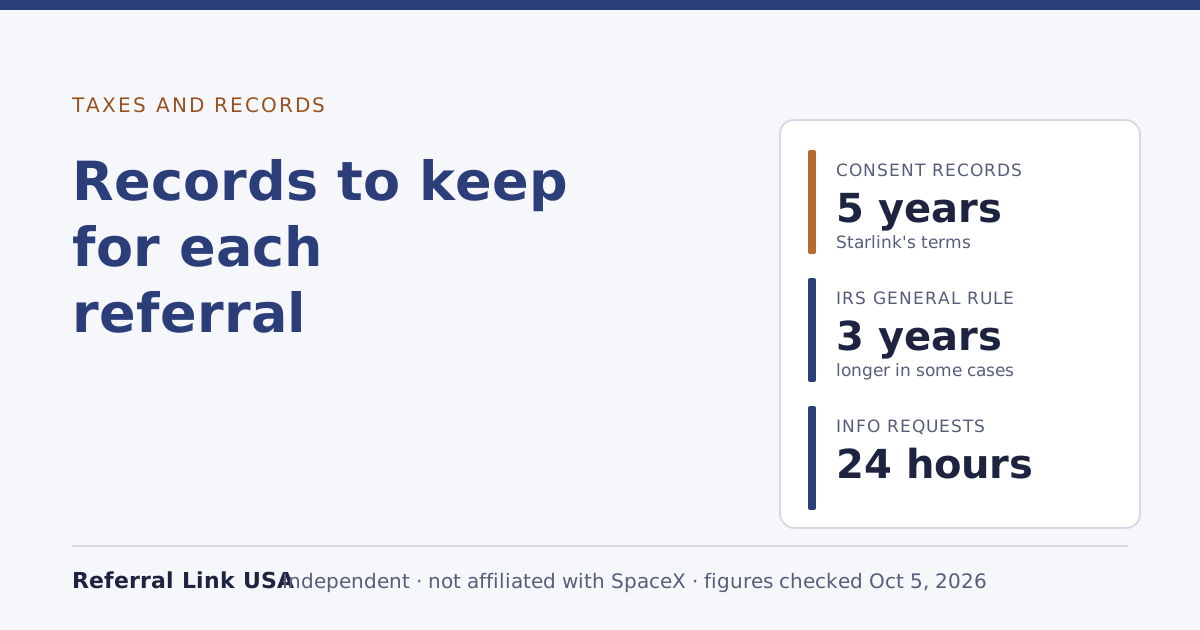
That’s the likely outcome for most referrers, and it doesn’t change your own obligations. Keep your log, total your cash and credits for the year, and take them to whoever prepares your return. Records to keep for each referral has a log you can copy, with columns for reward type and dates.
Building a year-end total
Whatever arrives in the mail, a simple year-end total makes the conversation with your tax preparer short. Do this in January for the year just ended:
- List every reward from your log. One line per referral, with the date it was issued and whether it was cash or credit.
- Match cash to deposits. For each cash reward, find the deposit on your bank statement. Note the date it posted and the amount received. Remember that any fee your bank charges to receive the payment is yours to pay, so the deposit may be a little lower than the reward.
- Match credit to invoices. For each credit, find the Starlink invoice it reduced.
- Note anything unusual. A cash reward that was re-issued as credit, a reward that was later revoked, or a payment issued in December but deposited in January.
- Total the cash and the credit separately. Bring both totals, and the log, to whoever prepares your return.
If you referred only a handful of people, this takes ten minutes. It also gives you something to compare against if a form ever does arrive. The taxes page has a worked example with both credit and cash.
Common mistakes
- Assuming “no 1099” means “not taxable”. The IRS rule is the opposite: income is taxable unless excluded.
- Counting only cash. Credit may matter too, and nobody has stated otherwise.
- Mixing up 1099-MISC and 1099-K thresholds. They’re very different, and they apply to different kinds of payer.
- Relying on old $600 figures. For 2026 payments, the 1099-MISC threshold in the current instructions is $2,000.
- Throwing away deposit records. Bank statements are your evidence if a form ever disagrees with you.
What we don’t know
As of our Oct 5, 2026 check, nobody has stated:
- Whether SpaceX or its payment processor issues any Form 1099 for referral cash, and which one.
- Which company is the payer of record for cash rewards.
- How service credits are treated for tax.
- How the 1099-MISC threshold will be adjusted for inflation from 2027.
If you’ve received a 1099 for referral cash and can tell us, without personal details, which form it was and who issued it, the contact page explains how. We’ll report it as a reader account, not as Starlink’s practice.
What to do next
- Want the full tax picture? Read taxes on referral rewards.
- Choosing credit or cash? Credit or cash compares them.
- Need definitions? The glossary explains each form in plain words.
- Starting a log? Use records to keep for each referral.