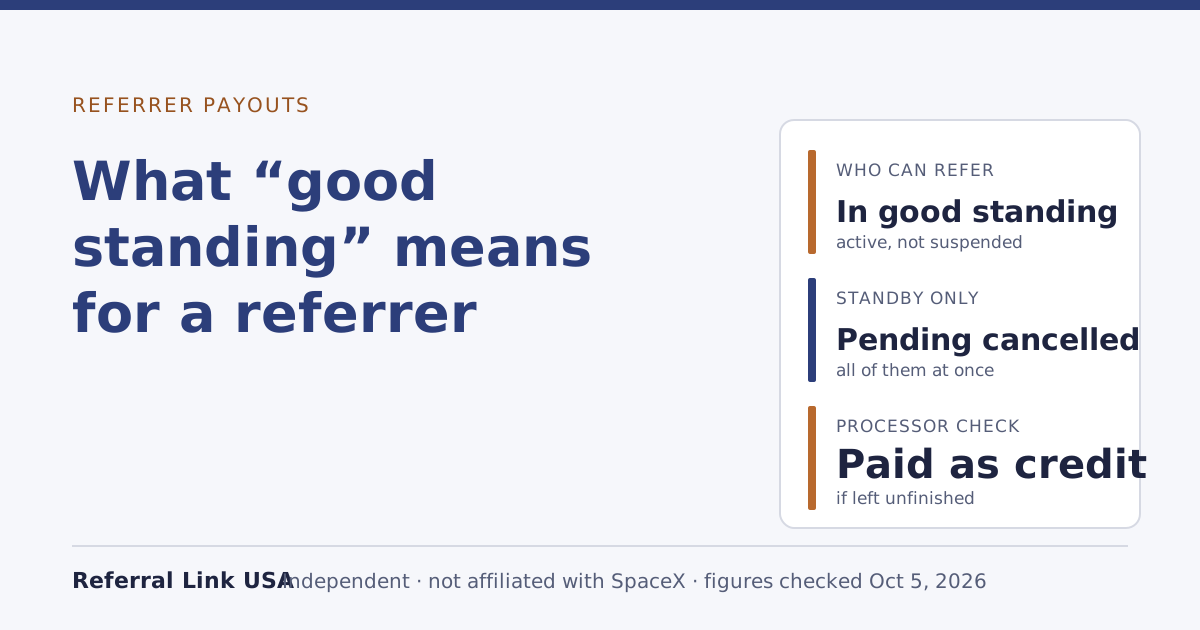
For a Starlink referrer, “good standing” means four things at once: an active Starlink account that isn’t suspended, at least one high-speed plan (Standby alone doesn’t count), a completed payment-processor registration if you take cash, and no breach of the program’s sharing rules. The terms use the phrase without defining it, but each of those four has a clear consequence written into the text. Lose the first two and every pending referral is cancelled; lose the third and cash becomes credit; lose the fourth and even issued rewards can be taken back.
Below: where the phrase appears, the four kinds of standing in our reading, what breaks each one, and a short routine that keeps all four intact.
Where the phrase appears
The opening of the Referral Program Terms sets the entry condition:
“Participation in the Program is voluntary and open only to active Starlink subscribers in good standing. If Referrer fails to maintain an active high-speed Starlink service plan (excludes Standby Mode), SpaceX may cancel all Pending Rewards (defined below). Participation may be limited to consumer account types.”
The phrase comes back in the section headed “Maintain Good Standing”, which covers the payment processor and your own subscription, and once more for the referred customer, who must stay “continuously subscribed and in good standing” for two full billing cycles. Nowhere is it defined. So when we split it into four parts below, that’s our reading of how the clauses fit together, not a definition Starlink has published.
The four kinds of standing
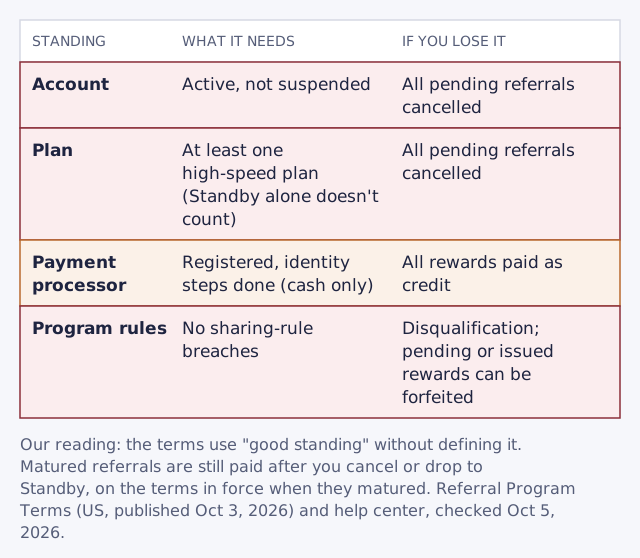
1. Account standing: active and not suspended
The baseline is that only active subscribers in good standing can take part. The help center frames it from the other side: the program customers on an active Residential or Roam plan.
What breaks it: a suspension. The terms don’t list causes, but the obvious one is an unpaid bill. They do spell out the consequence, in the same clause that covers cancelling:
“If Referrer cancels their Starlink subscription, has their Starlink subscription suspended, or otherwise fails to maintain at least one high-speed service plan Starlink subscription (excludes Standby Mode), all Pending Referrals will be cancelled and Eligible Referrals will be paid on the terms at the time such Eligible Referral matured.”
“All” is the important word. One missed payment that leads to a suspension can wipe out several referrals at once, including ones that were weeks from maturing.
2. Plan standing: at least one high-speed plan
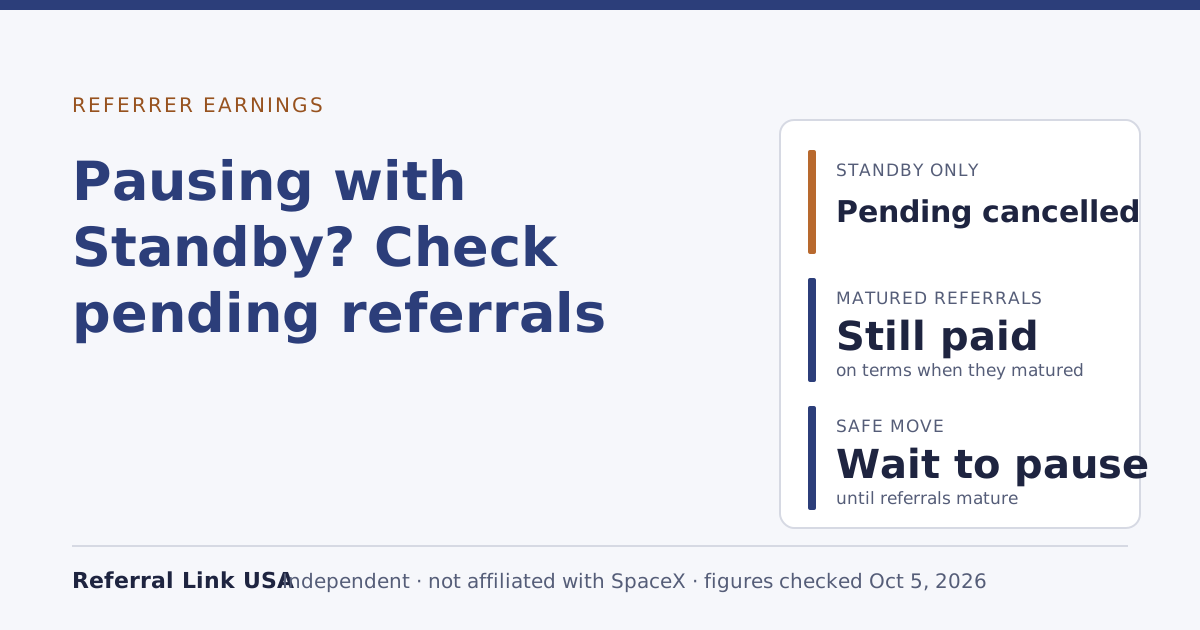
Being a customer isn’t enough; you need a high-speed plan. Standby Mode pauses service for a small monthly fee and does not count as a high-speed plan for the program. If you move your only service line to Standby for the winter, you’re still a customer, still paying, and still out of standing for the program. The Standby guide covers safe timing if you want to pause.
The wording “at least one” matters if you have more than one service line: in our reading, keeping one line on a high-speed plan is enough, even if another is paused. The terms don’t address multi-line accounts directly.
3. Processor standing: only if you take cash
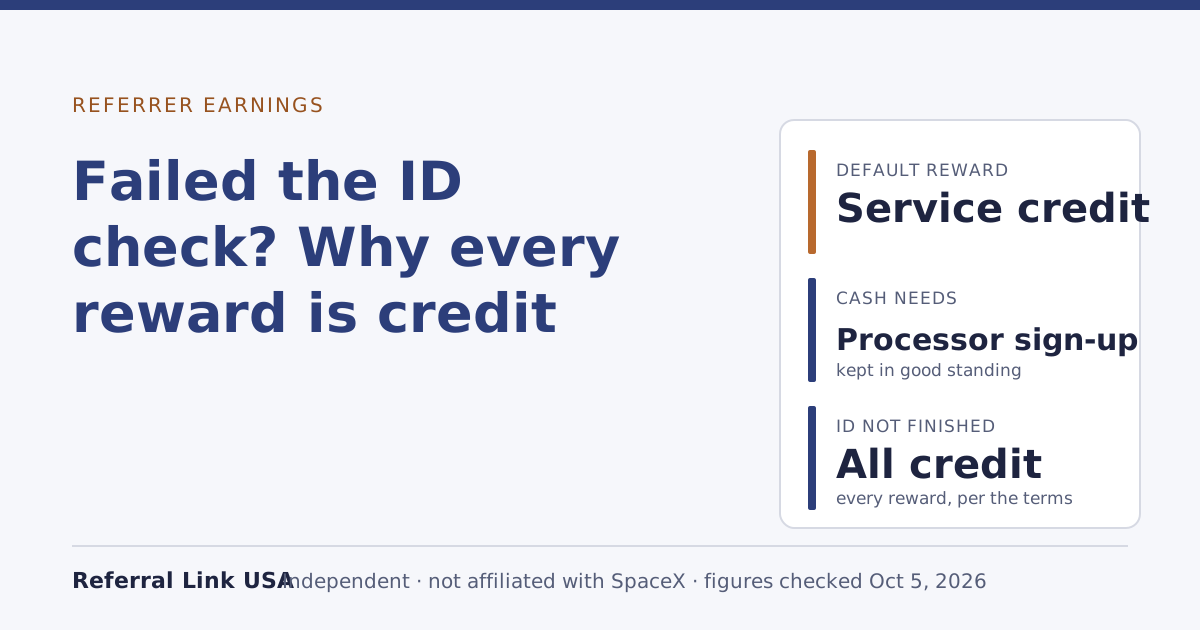
This one only applies once you switch to cash. Cash needs registration with SpaceX's chosen third-party payment processor, kept in good standing. Falling out of standing with the processor doesn’t cancel anything, but it changes how you’re paid: if you don't finish the processor's identity checks, every reward is paid as credit. That’s a softer consequence than the first two, but it surprises people who chose cash and keep seeing credit. See the processor’s ID check.
4. Program standing: the rules you agreed to
Sharing your link accepts the terms, and the terms come with conduct rules: no unsolicited contact, no paid ads, no extra accounts, no claims to work for Starlink, and more. The sharing rules list all ten. The consequence of breaking one is the harshest in the document: breaking a sharing rule can mean disqualification and forfeiting pending or issued rewards. And separately, a reward can be limited, delayed or revoked, even after it's issued, for fraud, abuse or a terms violation.
There’s also a procedural duty: you must answer any SpaceX information request within 24 hours (or the deadline it gives). Missing that deadline is itself a violation.
What each loss costs, side by side
| You lose | Pending referrals | Matured referrals | Issued rewards |
|---|---|---|---|
| Account standing (suspended) | All cancelled | Paid, on the terms when they matured | Kept |
| Plan standing (Standby only, or cancelled) | All cancelled | Paid, on the terms when they matured | Kept |
| Processor standing | Unaffected | Paid as credit, not cash | Kept |
| Program standing (rule breach) | Can be forfeited | Can be cancelled | Can be revoked, even after payment |
The first three are about logistics and can be fixed going forward. The fourth is the only one that reaches back to money you’ve already received.
Three owners, three outcomes
These are hypothetical examples to show how the clauses combine.
- The forgotten card. An owner’s card expires, two invoices fail, and service is suspended for a week before they notice. They had two referrals pending. Both are cancelled under the clause above, even though service was restored days later. One older referral that had already matured is still paid.
- The winter pause. An owner with one service line moves it to Standby in November. One referral matured in October and is paid. Another, from a September order, hadn’t finished its two cycles and is cancelled. Had they waited until it matured, both would have paid.
- The unfinished ID check. An owner switches to cash but never uploads the identification the processor asks for. Their next three rewards arrive as service credit. Nothing is lost in value, since credit and cash are the same value, but none of it reaches their bank.
A five-minute standing routine
Do this once a month while any referral is pending:
- Open your billing page. Confirm your last invoice was paid and your card on file isn’t about to expire.
- Check your plan. At least one service line on a high-speed plan, not Standby.
- Check your reward type. If you want cash, make sure it’s selected and the processor shows no outstanding steps.
- Check your email. Any request from SpaceX or the processor gets answered the same day.
- Check how you’ve shared. Only with people who asked, with no ads, posts or bulk messages. If you keep a log, add anything new; records to keep for each referral has a template.
Standing and timing: when it matters most
Good standing isn’t something you need every day of the year. It matters most in a specific window: from the day someone orders through your link until that referral has matured, plus the extra days a cash payment can take. Outside that window, a lapse costs you nothing in the program, although it may still matter for your service.
That gives a practical rule of thumb. Before you share your link, check all four kinds of standing. While anything is pending, don’t change your plan, let a card lapse or leave a processor request unanswered. Once every referral has matured and been paid, you’re free to pause or switch plans without losing anything, because if the referrer cancels, is suspended, or drops to Standby only, all pending referrals are cancelled, and that clause only reaches pending referrals.
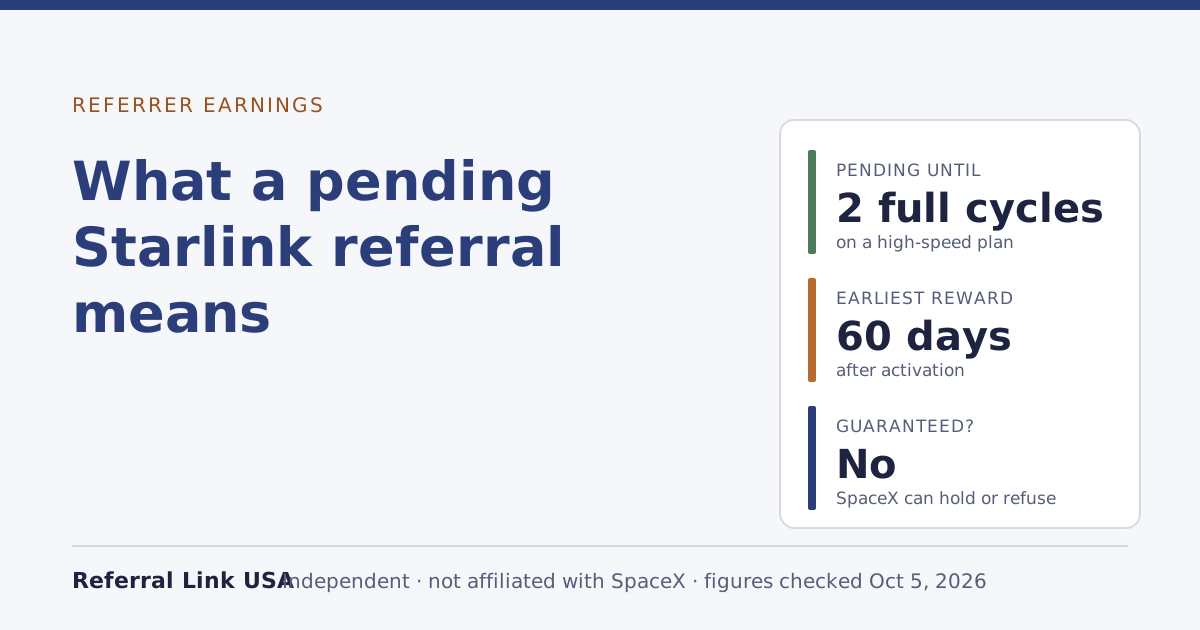
Two dates help you see the window. Starlink says you get an email when someone orders through your link, which marks the start. And rewards are issued as soon as 60 days after the friend activates, which marks the earliest end. If you take cash, add up to 30 days, because cash can be paid up to 30 days after the referral matures.
How standing differs from eligibility
Standing is about you. Eligibility is about the person you referred. A referral can fail even when your standing is perfect, if the new customer had a Starlink account before, bought at a store, or left before two full billing cycles. And a perfectly eligible referral can still be lost if your own standing lapses while it’s pending. The program rules cover the new customer’s side; this page covers yours.
Common mistakes
- Assuming “customer” means “in good standing”. Standby customers and suspended customers are both still customers, and both lose their pending referrals.
- Letting a card expire with referrals pending. The terms don’t give a grace period before a suspension cancels referrals.
- Pausing “just for a month”. A single month on Standby only is enough to cancel everything pending.
- Choosing cash and ignoring the processor. The setting alone doesn’t make rewards cash.
- Treating a sharing shortcut as low risk. It’s the only kind of lost standing that can claw back paid rewards.
What we don’t know
As of our Oct 5, 2026 check, Starlink doesn’t state:
- A definition of “good standing” for referrers.
- How long a payment can be overdue before service is suspended, or whether a brief suspension that’s quickly fixed still cancels pending referrals in practice.
- How multi-line accounts are treated beyond the “at least one” wording.
- Whether you’re told when a pending referral is cancelled because of your own standing.
We’ll update this guide if Starlink publishes any of these. The changelog records every dated change to the referral rules we can source.
What to do next
- Planning a pause? Read pausing or cancelling your own plan first.
- Taking cash? Finish the steps in credit or cash.
- New to referring? The owner’s guide has the readiness checklist.
- Unsure about a sharing method? Check it against the sharing rules.