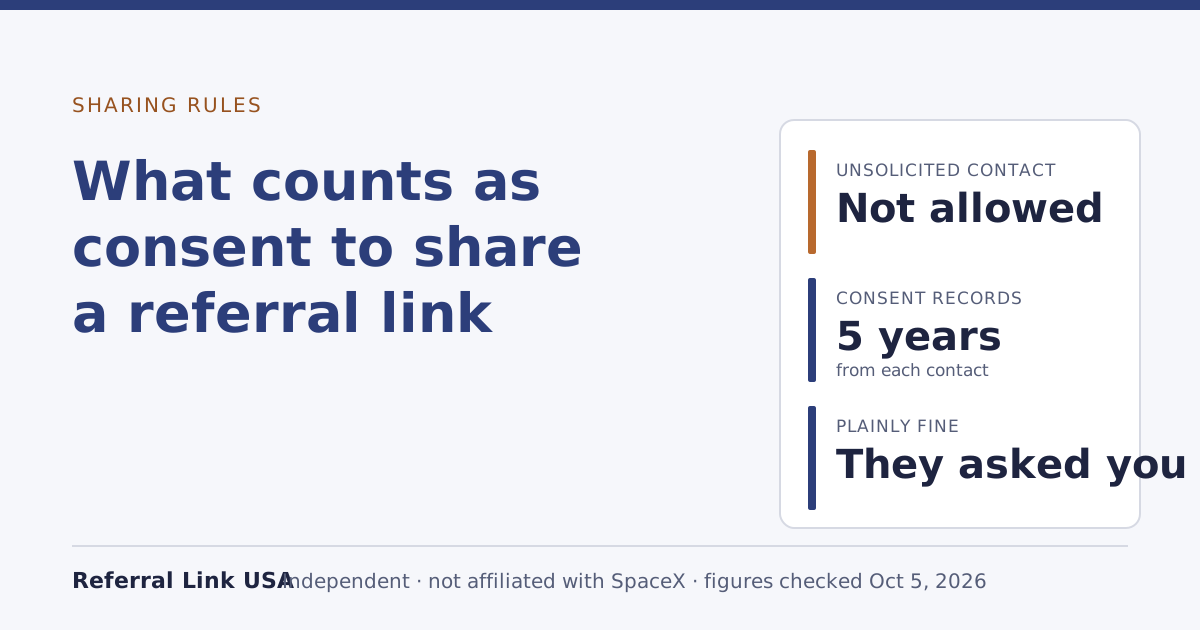
Consent, for a Starlink referral link, means the person asked you for it, or said yes when you asked whether they wanted it. The Referral Program Terms ban unsolicited contact “of any kind” with prospective customers and make you responsible for getting consent before you contact anyone, and for keeping a record of it for five years. The terms don’t define consent, so the safest reading is the plainest one: no link goes to anyone who hasn’t asked for it.
Below: the clause itself, eight everyday situations sorted from fine to not, how to keep a record without collecting anyone’s personal data, and how this compares with the federal email rules people sometimes quote.
The clause
Section 6 of the terms lists what referrers must not do. Item (c):
“Engage in unsolicited contact with any prospective subscribers of any kind. The Referrer is solely responsible for obtaining and maintaining a record of consent before sending any commercial electronic message or otherwise contacting prospective Referred Subscribers. Such records must be maintained for five years from each contact and submitted to SpaceX upon request.”
Three duties sit in there:
- Don’t contact people who haven’t asked. “Of any kind” covers texts, emails, calls, DMs, posts and in-person pitches.
- Get consent first, before any message about the referral.
- Keep proof for five years from each contact, and hand it over if SpaceX asks.
The terms also say the referrer decides whether, when and how to share the link. That freedom works inside section 6, not around it.
What “consent” means here
The terms don’t define it. Our reading, which we think any reasonable reader would share:
- Clear consent: the person asked you for your link. “Can you send me your referral link?” is the cleanest case there is.
- Also consent: you asked “Would you like my referral link?” and they said yes.
- Not consent: silence, a “like” on a post, membership of a group you’re in, being in your phone contacts, or having given you their email for some other reason.
That last point has its own clause in the terms: don't reuse personal information collected for another purpose unless privacy law allows it. A customer list from your job, a club’s member directory, or a church email list were all collected for other purposes.
Eight situations, sorted
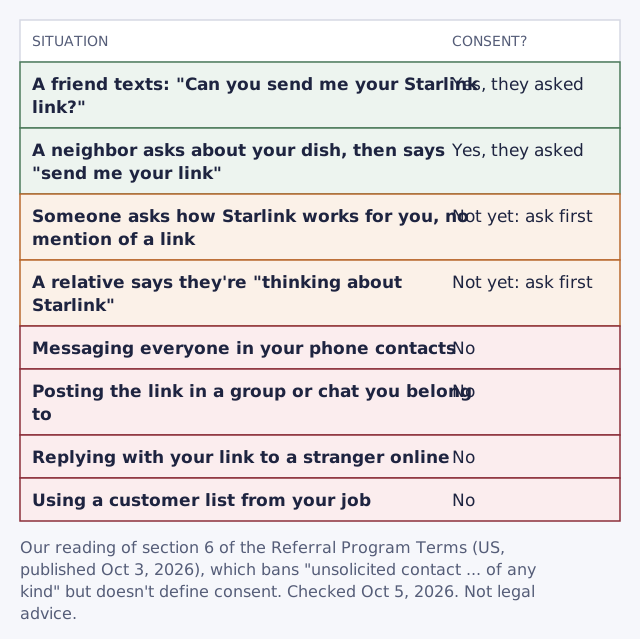
Clearly fine
A friend asks for your link. They texted, emailed or said it in person. Send it. Their message is your record.
A neighbor asks about your dish, then asks for the link. The question about the dish isn’t consent by itself; the request for the link is.
Ask first
Someone asks how Starlink is working for you. They asked about your experience, not for a referral. Answer the question honestly. Then, if it seems welcome: “Want my referral link? You’d get a free month and I’d get a reward.” A yes is consent.
A relative says they’re thinking about Starlink. Same approach. Offer, don’t send.
Asking once is fine. Asking again after a no, or following up repeatedly, starts to look like the unsolicited contact the clause bans.
Not consent
Messaging your contacts. Everyone in your phone or address book didn’t ask. The site’s sharing rules page rates this “not allowed”.
Posting in a group you belong to. A neighborhood chat, a forum, a social media group or feed reaches people who didn’t ask you. Being a member doesn’t make you invited to pitch. If someone in the group asks for a link, the safer move is to reply privately to that one person, and only if they asked you.
Replying with your link to strangers online. “Anyone have a Starlink referral?” threads are exactly where unsolicited contact and link-dumping happen. Stay out.
Using a work customer list. Collected for another purpose, and possibly a breach of your employer’s rules too.
Wording that asks without pushing
If someone shows interest but hasn’t asked for a link, a single, low-pressure question is enough. A few versions that work:
Copy and edit
"Happy to answer anything about it. If you do order, I have a referral link: you'd get your second month free and I'd get a reward from Starlink. Want it?"
Copy and edit
"No pressure at all, but if you'd like my referral link, just say and I'll send it."
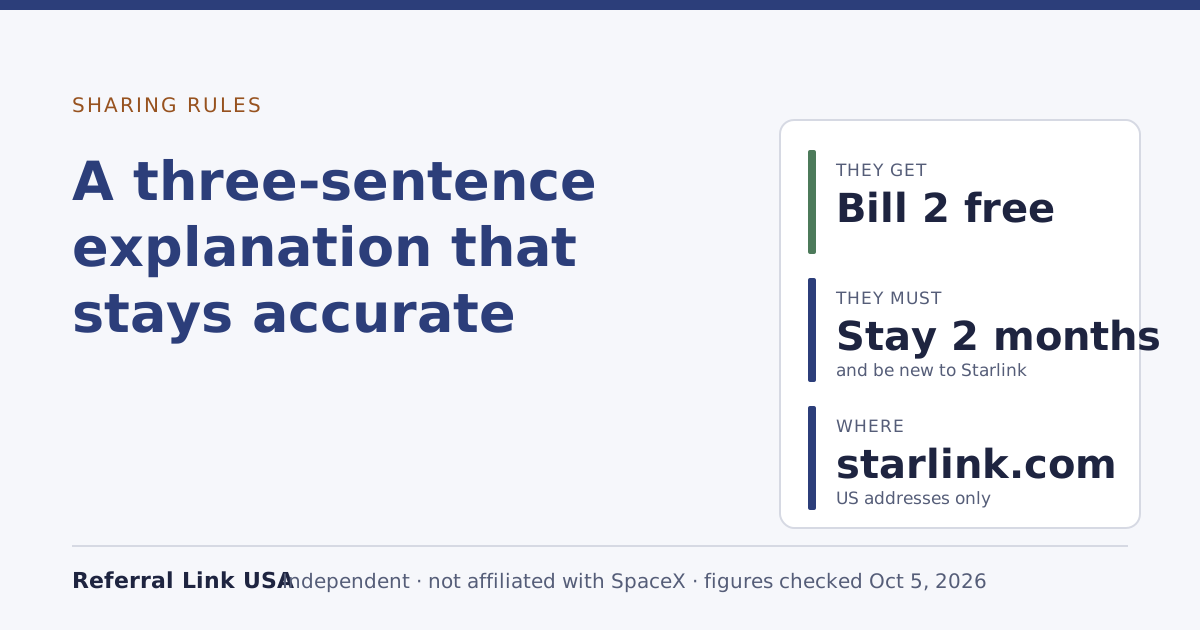
Then stop. If they say yes, send the link with an accurate explanation (our three-sentence message is built for that). If they say no or don’t answer, that’s the end of it. Don’t follow up a week later “just checking”; a second unprompted nudge is the kind of contact the clause is aimed at.
Paid ads are a separate ban
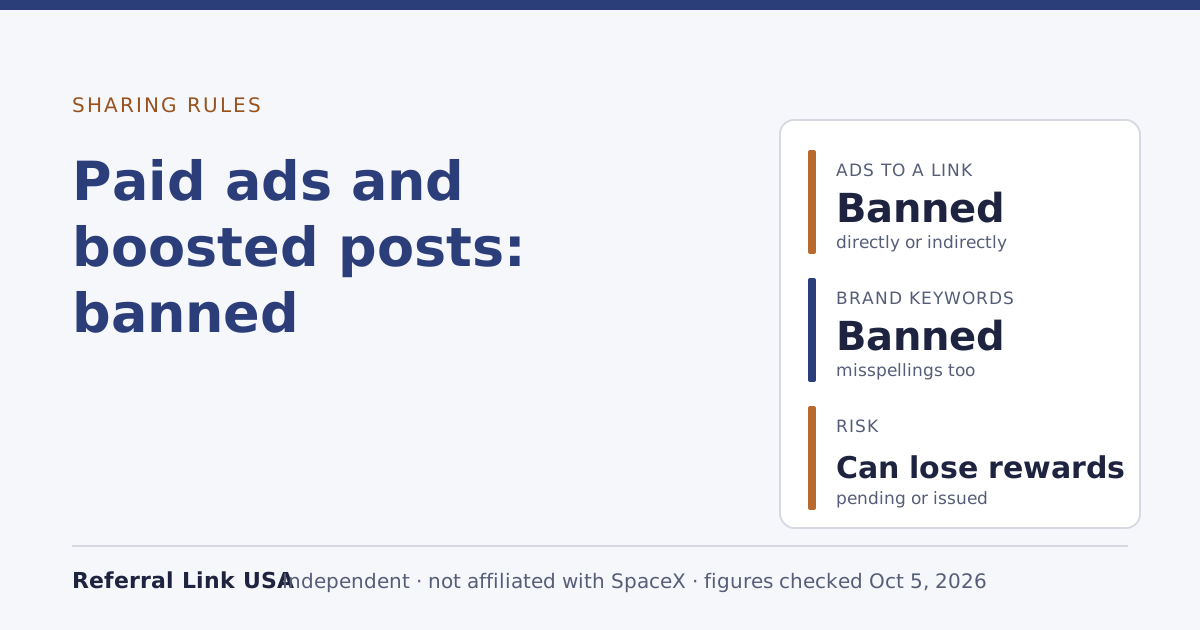
Even if everyone who sees an ad “chose” to click it, ads are out on their own: no paid ads that send traffic to a referral link, directly or indirectly, and no bidding on Starlink or SpaceX terms. Boosted posts count. So does bidding on “Starlink” in search ads. Sharing rules has the full list.
Keeping a record without collecting data
There’s a tension in the terms. You must keep a record of consent for five years, but you must not collect a prospect’s personal data. The rule in full: don't collect a prospect's personal data; share only the link and send them to starlink.com. The way through is to record the fact of consent, not the person’s details.
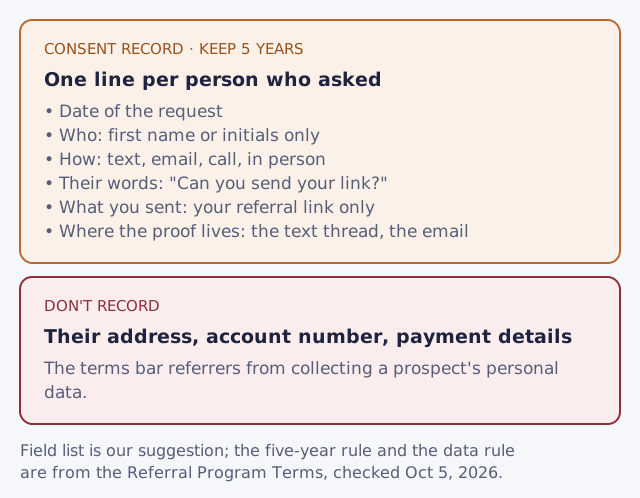
In practice:
- The message thread is the record. If someone texted “send me your link”, keep that thread. If they emailed, keep the email. Don’t delete chats with people you referred.
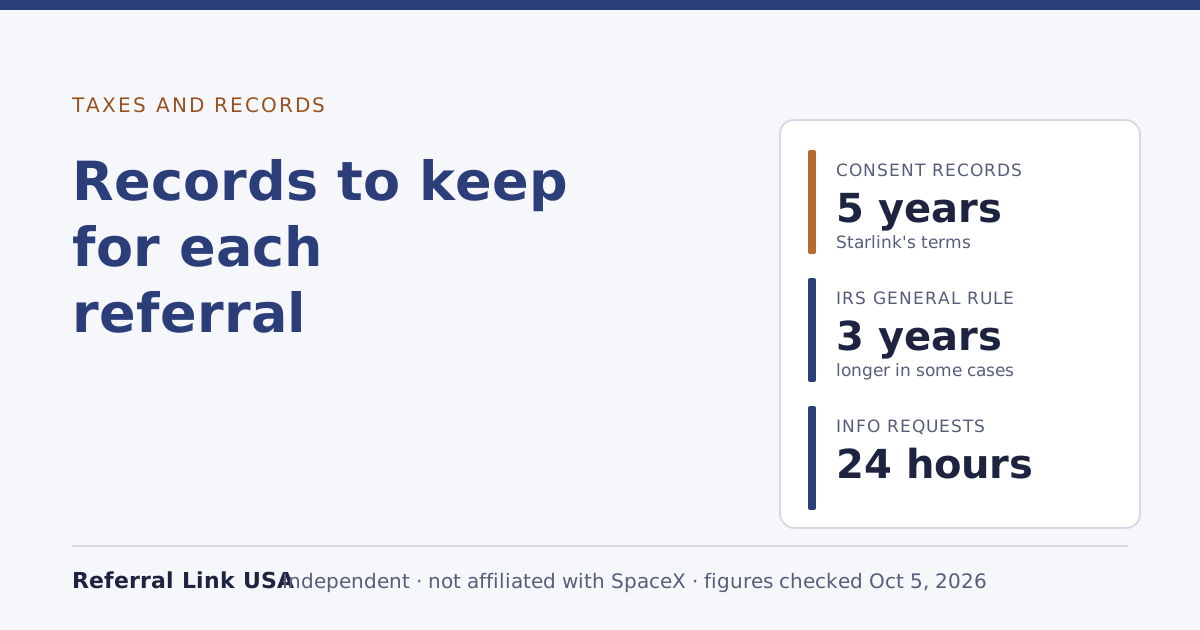
- A one-line log helps if you refer more than one or two people: date, first name, how they asked, what you sent. Records to keep for each referral has a template that combines this with reward tracking.
- Five years from each contact. A request in October 2026 means keeping the record until October 2031.
- Be ready to answer. You must answer any SpaceX information request within 24 hours (or the deadline it gives). A consent record you can find in a minute makes that easy.
How this compares with federal email rules
People sometimes point out that federal law doesn’t require consent before a marketing email. The FTC’s CAN-SPAM guide says the law covers “all commercial messages, which the law defines as ‘any electronic mail message the primary purpose of which is the commercial advertisement or promotion of a commercial product or service’”, and it works on an opt-out basis: recipients must be able to unsubscribe.
That’s a legal floor, not the referral terms. Starlink’s terms are stricter: no unsolicited contact of any kind, consent first, records kept. Meeting CAN-SPAM doesn’t make a cold email within the terms, and breaking the terms has its own cost: breaking a sharing rule can mean disqualification and forfeiting pending or issued rewards. None of this is legal advice.
Why it matters to you
The consent clause isn’t decoration. The terms make you certify every referral: by submitting a referral you certify it meets every eligibility rule. And rewards can be pulled back later: a reward can be limited, delayed or revoked, even after it's issued, for fraud, abuse or a terms violation. A referral that came from a cold message is the easiest kind for SpaceX to question, and a five-year record is how you show it didn’t.
There’s also a human reason. People generally don’t like being pitched by friends. “They asked me” keeps both the program and the friendship simple.
Special cases
- The person is going through a hard time. The sharing rules say: no targeting of vulnerable people. And the new customer must not be someone experiencing financial hardship, domestic or family violence, or another vulnerability. Even with consent, don’t push.
- A friend asks you to send your link to their sister. Your friend’s consent isn’t the sister’s. Let your friend pass on the request, and send the link when the sister asks you herself.
- You help someone order. Fine to explain; don’t fill in their details or take payment. The sharing rules say: no selling, negotiating or taking payment on SpaceX's behalf.
Common mistakes
- Treating group membership as consent. It isn’t.
- Sending first and asking later. Ask first.
- Deleting the thread. It’s your five-year record.
- Writing down people’s addresses “to keep track”. That’s the data the terms say not to collect.
- Relying on CAN-SPAM. The terms are stricter.
What we don’t know
As of our Oct 5, 2026 check, the terms don’t define consent, don’t say what form a record must take, and don’t say how SpaceX will ask for records. Our guidance above is the cautious reading, labeled as ours.
What to do next
- Someone asked? Send an accurate message: a three-sentence referral explanation.
- Tempted to sweeten it with cash? Read offering to split your $100 first.
- Want every method checked against the terms? See sharing rules and the glossary entry on unsolicited contact; the owner’s guide covers the rest.