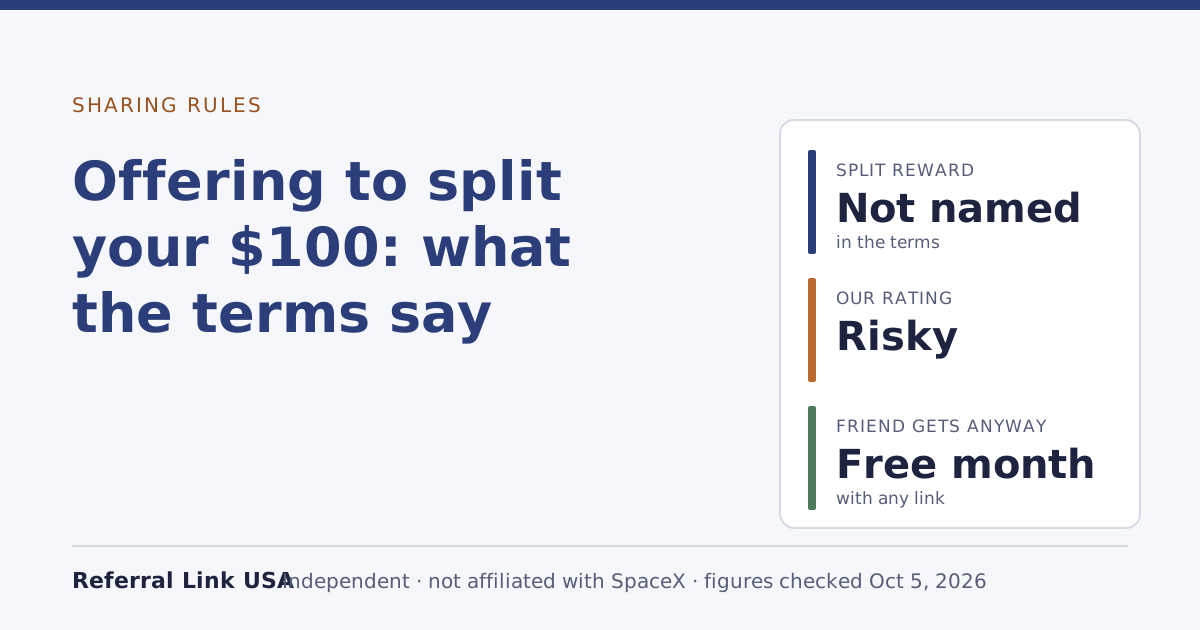
Starlink’s referral terms don’t mention splitting your reward with the person you refer. They don’t allow it and they don’t ban it. But the rules around it, against negotiating with prospective customers, against workarounds to generate rewards, and against unsolicited contact, make an up-front offer to split the reward risky, and SpaceX can cancel rewards it sees as abuse. The safer approach is to explain both rewards honestly and let the person decide.
This is a reading of the terms, not a quote of a rule, so we’ll show our working: the clauses that matter, how they apply to the common versions of “I’ll split it with you”, and what to do instead.
What the terms say, and don’t
There’s no clause about sharing, splitting or passing on a reward. Searching the Referral Program Terms (republished Oct 3, 2026) for “split”, “share the reward” or “incentive to the referred subscriber” finds nothing. So anyone who tells you splitting is “against the rules” or “totally fine” is going beyond the text.
What the terms do contain are four clauses that sit right next to it.
1. No negotiating or transactions on SpaceX’s behalf
“Conduct any transaction on SpaceX’s behalf, including negotiating with a prospective or referred customer, receiving payment from them, entering into an agreement, or making a sale.”
“Use my link and I’ll give you $50” is a deal offered to a prospective customer, about a Starlink purchase. It isn’t a sale on SpaceX’s behalf, but it’s close enough to “negotiating with a prospective customer” that the site’s sharing rules page rates it risky.
2. No workarounds to generate rewards
The sharing rules say: no extra accounts or other ways around the eligibility rules. Paying people to sign up through you is a way of generating rewards that the eligibility rules weren’t built for.
3. The genuine-use rule
The new customer actually uses the service and intends to keep it; SpaceX compares retention against the national average. A customer who signed up because of a cash offer, or who stays only because you’re covering their bill, is the kind of account that rule exists to spot.
4. SpaceX can cancel rewards
A reward can be limited, delayed or revoked, even after it's issued, for fraud, abuse or a terms violation. And SpaceX alone decides whether a referral counts, and its decision is final. If SpaceX decides a split offer was abuse, you don’t get to argue the point.
Where each version lands
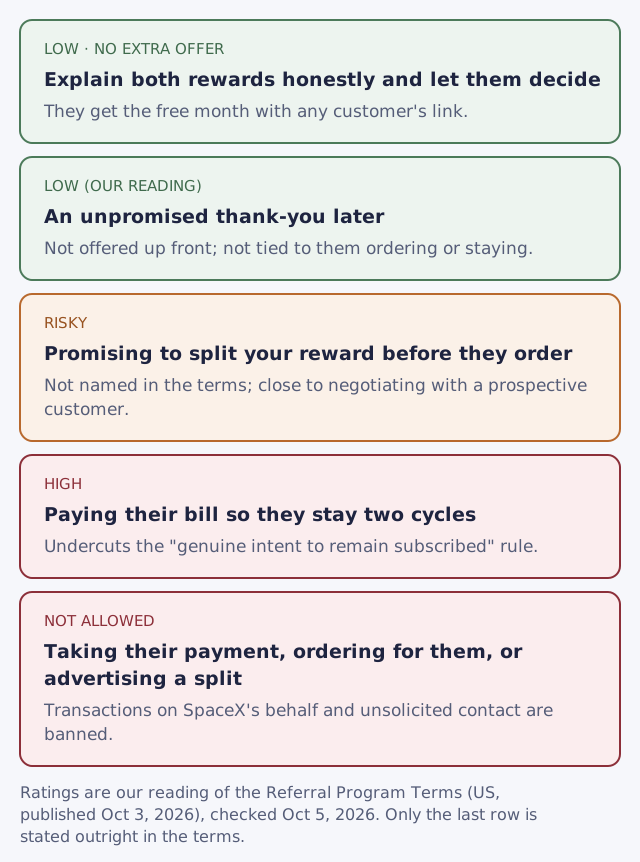
| Version | Our rating | Why |
|---|---|---|
| Explain both rewards; no extra offer | Low | Nothing beyond sharing the link, which is your role |
| An unprompted thank-you after they’re set up, never promised | Low (our reading) | Not an inducement to order or to stay |
| “Use my link and I’ll give you half” | Risky | Close to negotiating with a prospect; not named in the terms |
| “I’ll pay your first two months so the referral counts” | High | Undercuts genuine intent to stay; looks like buying a referral |
| Taking their payment, ordering for them | Not allowed | Transactions on SpaceX’s behalf are banned |
| Posting “I’ll split my reward” in a group or forum | Not allowed | Unsolicited contact; ads banned separately |
Why the split usually buys you very little
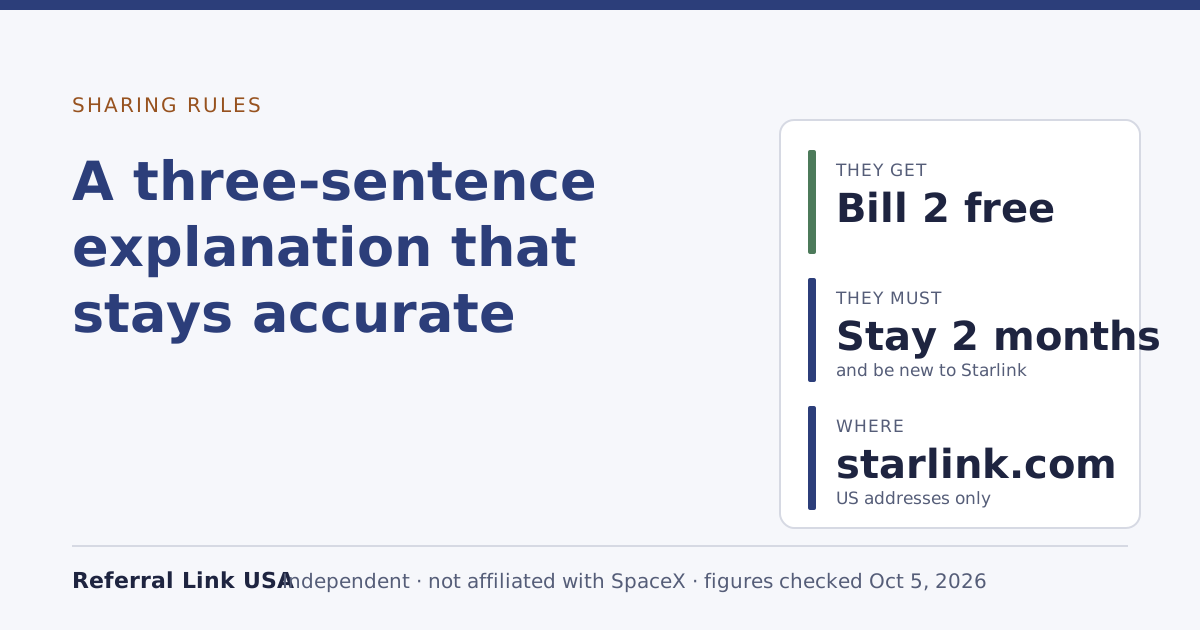
Here’s the part people miss. The person you refer gets exactly the same thing from Starlink whoever’s link they use: one free month of service on the eligible plan picked at sign-up, credited on the second monthly bill. Their free month doesn’t grow with a split, and it doesn’t depend on your choice of credit or cash: the new customer still gets the free month if the referrer takes cash.
So a split offer isn’t about making Starlink cheaper for them; Starlink already does that. It’s about getting them to pick your link over someone else’s. That’s a competitive move, and it only makes sense if you’re reaching people who don’t already know you, which is where the consent rule bites. Friends who ask you for your link will use it without a payment.
Worked numbers
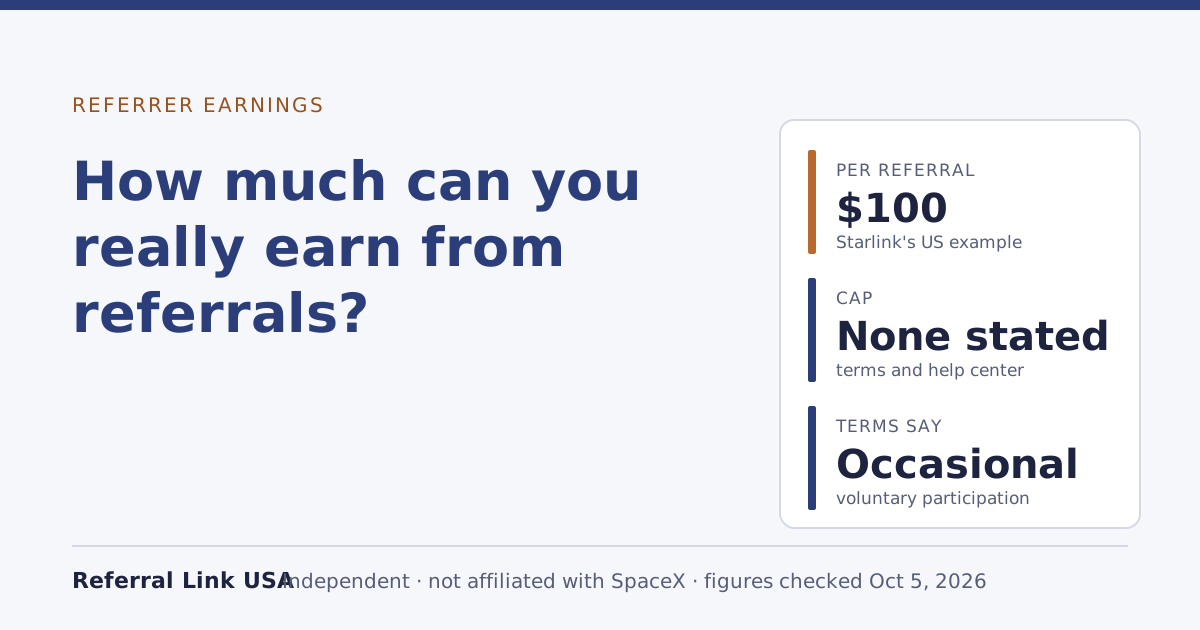
Take Starlink’s US example: your reward is $100, paid once, and only if the referral matures.
- No split: your friend’s second month is free (worth $55/mo on Residential 100 Mbps at the national list price). You get $100 after their two full cycles.
- Promised 50/50: your friend gets the same free month plus $50 from you. You net $50, but only if they stay two full cycles. If they leave in month two, you’ve promised money you never received, and it’s an awkward conversation.
- Covering their bills until the referral matures: on Residential 100 Mbps that’s month one, $55 at the national list price, since month two is the free one. You’d net about $45 at best, and it’s the version most likely to be seen as abuse, because the customer isn’t paying for the service they’re supposedly choosing to keep.
The arithmetic rarely favors the split, and the risk sits entirely with you.
The tax angle
Rewards arrive without tax handled: rewards come with no tax included or withheld, and the referrer alone decides whether tax is owed and files anything required. If you pass part of a reward on, the terms don’t say how that’s treated, and neither do we; it’s a question for a tax professional. What we’d suggest is simpler: don’t create a situation where you’ve promised money you’d then need to account for. Records to keep for each referral covers what’s worth noting either way.
If you’ve already promised a split
It happens: a friend was on the fence, you said “I’ll give you half”, and they ordered. There’s no need to panic, and nothing to report. A few sensible steps:
- Don’t make it bigger. No more offers, no covering bills, no conditions about staying.
- Keep your promise only if the reward actually arrives. Tell your friend plainly that Starlink pays you only if they stay two full billing cycles, and that you’ll share it if and when it comes. That keeps you from paying out money you never receive.
- Don’t repeat it with the next person. One informal promise to a friend is a very different thing from a standing offer.
- Keep the record honest. Your consent record should show they asked for, or agreed to, the link; the side promise isn’t something to hide, but it’s not something to build on either.
If someone offers you a split
Seen from the other side: if a stranger online offers you cash to use their link, be careful. You get the same free month with any US customer’s link, so the offer gives you nothing Starlink doesn’t. A person paying for sign-ups is also likely breaking the sharing rules, and SpaceX can cancel referrals tied to abuse. The simplest choice is a link from someone you know who has Starlink at a US address. What a referral link does, from click to credit explains what you actually get.
What to do instead
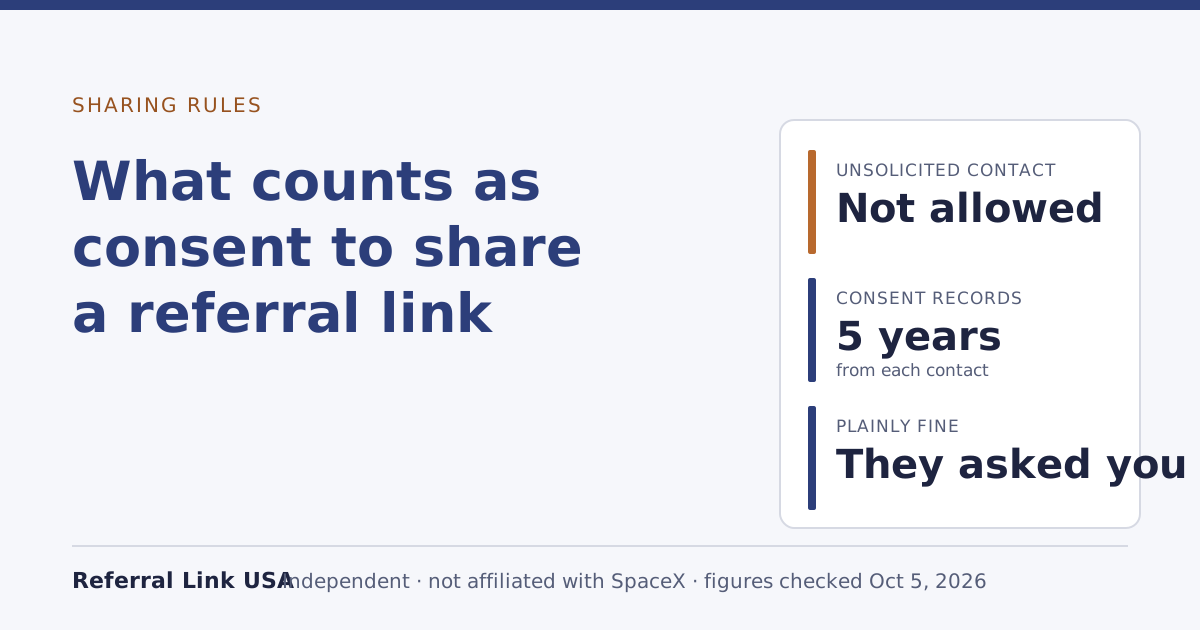
- Wait to be asked. The only sharing method that’s plainly fine is sending your link to someone who asked for it. What counts as consent has examples.
- Be upfront about both sides. “You’d get your second month free; I’d get a reward from Starlink if you keep it at least two billing cycles.” Our three-sentence message is written for exactly this.
- Don’t attach conditions. No “stay two months for me”. The minimum stay is theirs to decide.
- If you want to say thanks, do it later and unannounced. A coffee or a hand with setting up the dish is a friendship, not an inducement. Don’t promise it in advance.
Common mistakes
- Assuming silence in the terms means it’s fine. Not mentioned isn’t the same as allowed when adjacent clauses cover the same ground.
- Promising money before the referral matures. You may never receive the reward you split.
- Covering a friend’s bill to protect the referral. It’s the version most likely to be treated as abuse.
- Advertising a split to strangers. That’s unsolicited contact, and if paid, an ad.
- Calling it a “discount”. Implying a Starlink discount that doesn’t exist risks the no-misleading-claims rule: no false or misleading claims about Starlink or the program.
What we don’t know
As of our Oct 5, 2026 check, the terms don’t address splitting or sharing a reward, how SpaceX would treat a one-off thank-you payment, or the tax treatment of a reward passed on to someone else. Our ratings are our reading.
What to do next
- Want every sharing method rated? See sharing rules.
- Want to know what you can realistically earn without sweeteners? Read how much you can realistically earn.
- Owner basics: the owner’s guide and the glossary define the reward and its conditions.