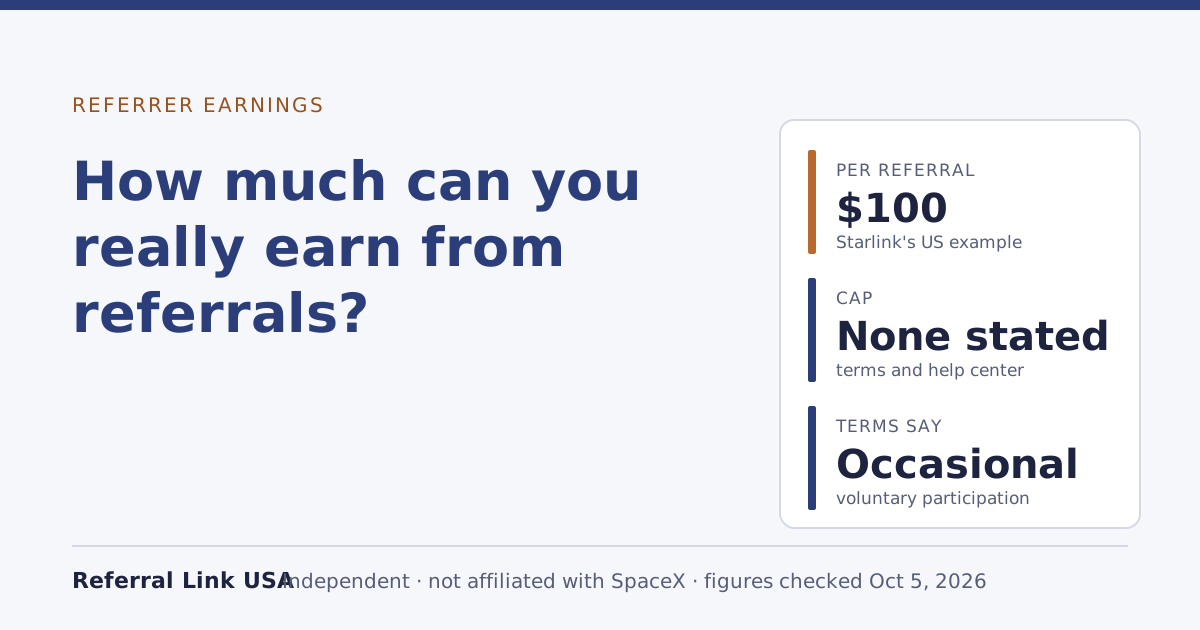
Each Starlink referral that matures earns you $100, Starlink’s US example, paid once as service credit or, if you opt in, cash. Neither the terms nor the help center sets a cap. But the terms also call participation “voluntary and occasional” and rule out cold contact, ads and posting your link in groups, so for most owners the realistic total is a few referrals a year: a few months off their own bill, not an income.
Here’s the arithmetic, what has to go right for each referral, why the sharing rules are the real ceiling, and what changes once your total gets bigger.
The reward, exactly
Four facts set the amount:
- The figure. The help center’s wording: “The amount depends on the country the person you referred signed up in, and is shown in your account (for example, $100 per successful referral in the US).” The terms add that the exact reward amount is the one shown in your Starlink account.
- Once per referral. Each successful referral pays once. There’s no recurring share of your friend’s bill.
- Credit or cash, same value. Credit and cash are the same value. Rewards arrive as service credit unless you choose cash.
- No cap stated. In our reading of both sources, neither the terms nor the help center state a yearly or lifetime capour reading.
And one thing that’s gone: you no longer get a free month yourself. That was the 2023 program, where both people received a service credit: the app's share button read "Free month for you and them". The changelog dates the change.
The arithmetic
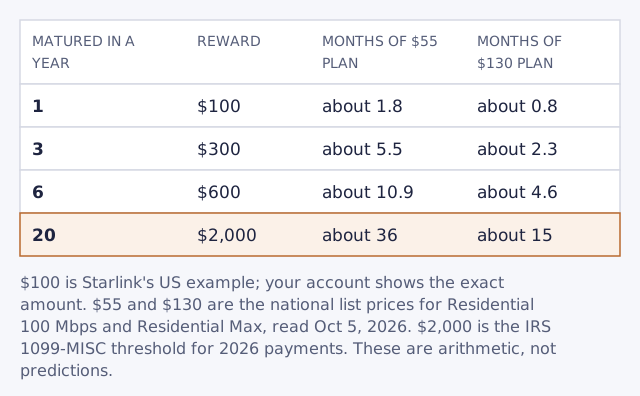
If you take credit, the useful way to think about it is months of your own service. On Residential 100 Mbps ($55/mo), one $100 reward covers a little under two months. On Residential Max ($130/mo), it covers most of one. Three matured referrals in a year would take roughly five months off a $55 plan, or a little over two off a $130 plan.
If you take cash, it’s simply $100 per matured referral, arriving up to 30 days after each one matures: cash can be paid up to 30 days after the referral matures.
What has to go right, every time
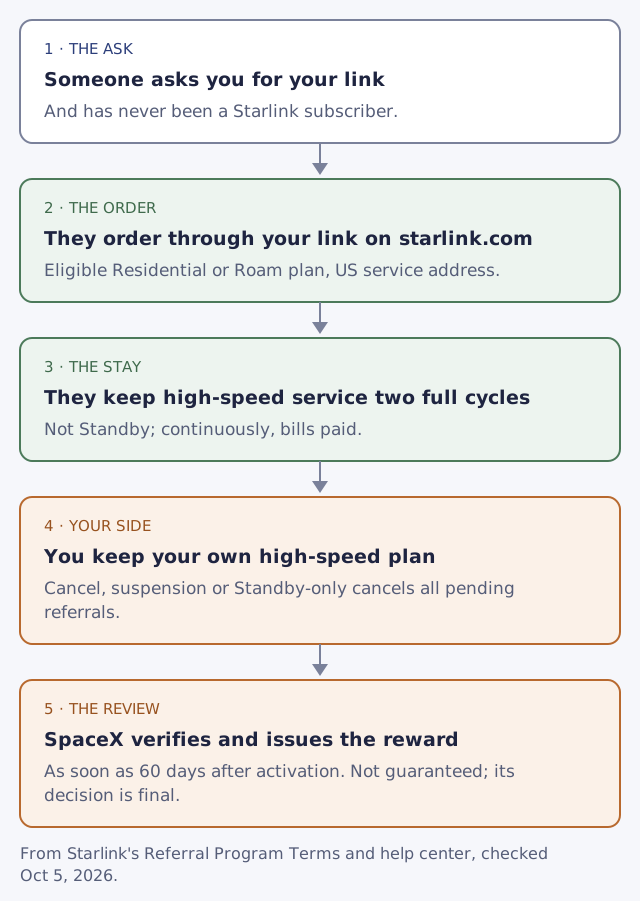
The reward isn’t paid for clicks or orders. It’s paid for a referral that matures, and a lot sits between “here’s my link” and that point:
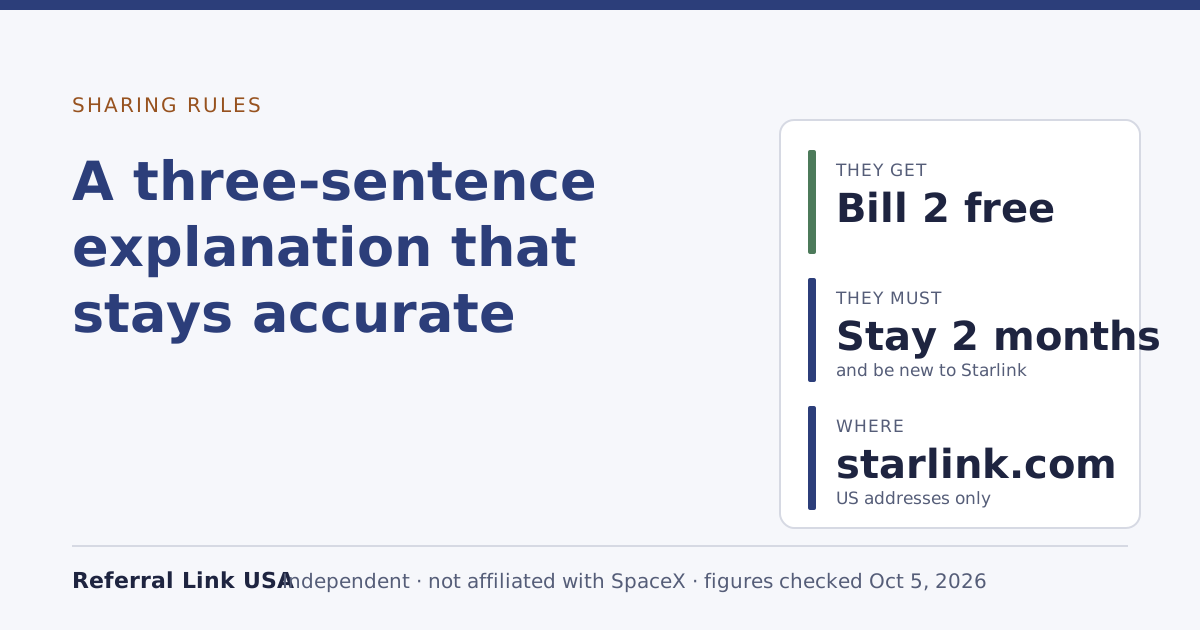
- The person must be new. The new customer has never been a Starlink subscriber. Friends who had Starlink before can’t count.
- They must order correctly. Through your link, on starlink.com, on one of the eight eligible plans, with a service address in the US. A store kit or a phone order away from the link doesn’t count.
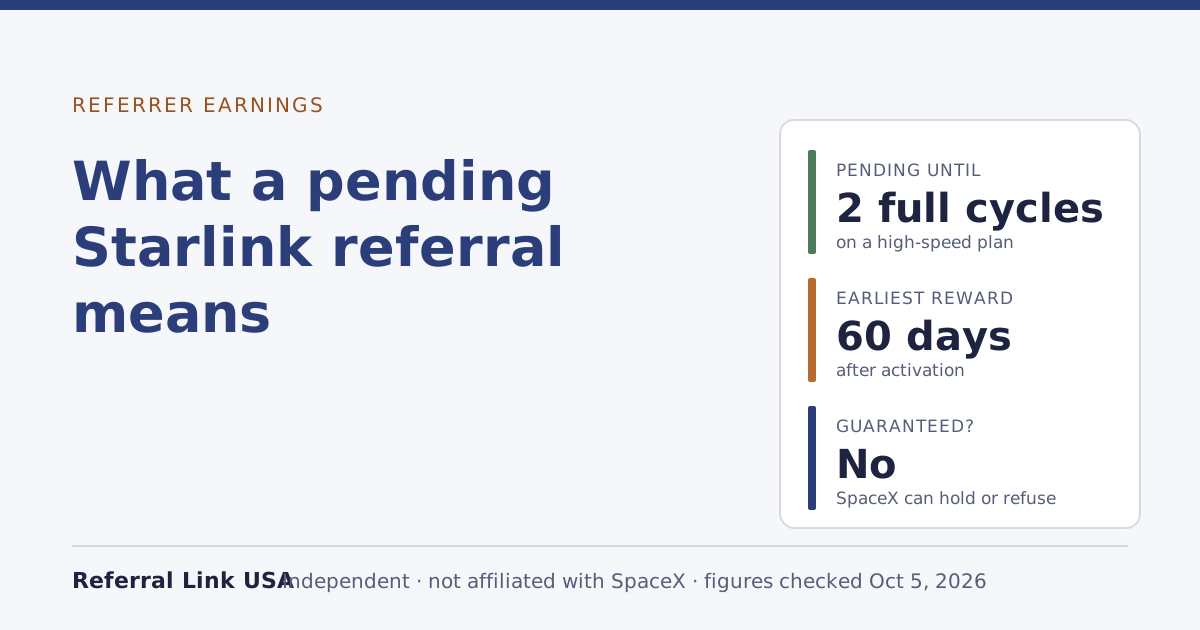
- They must stay. The new customer stays on a high-speed plan (not Standby) for two full monthly billing cycles. If they leave in month two, you get nothing; see friend cancelled in month two.
- You must stay. If the referrer cancels, is suspended, or drops to Standby only, all pending referrals are cancelled. One winter pause can wipe out several pending rewards; see pausing or cancelling your own plan.
- SpaceX must approve it. A pending referral is not guaranteed to pay; SpaceX can hold a reward while it checks eligibility, and SpaceX alone decides whether a referral counts, and its decision is final.
We don’t know how often each step fails; Starlink publishes no figures and we won’t invent any. The honest planning assumption is that some orders through your link will never become rewards.
Credit or cash: does the choice change what you earn?
No: same value either way. What changes is where the money lands and how much effort it takes. Credit is automatic and comes off your next Starlink invoice. Cash needs you to select it under Referral Reward Types and to register with SpaceX’s payment processor; the terms say if you don't finish the processor's identity checks, every reward is paid as credit. Bank fees on cash are yours to pay.
A practical way to choose: if you expect to keep Starlink for the foreseeable future, credit is simpler and just as valuable. If you’d rather have the money, or you’re likely to leave Starlink in the next year, cash avoids building up credit you might not use; the terms don’t say what happens to unused credit when you cancel. Why every reward can become credit covers the processor step.
The real ceiling: how you’re allowed to share
With no cap, the limit on earnings is how many people can legitimately end up with your link. That’s set by section 6 of the terms, and it’s strict. Among other things, you may not:
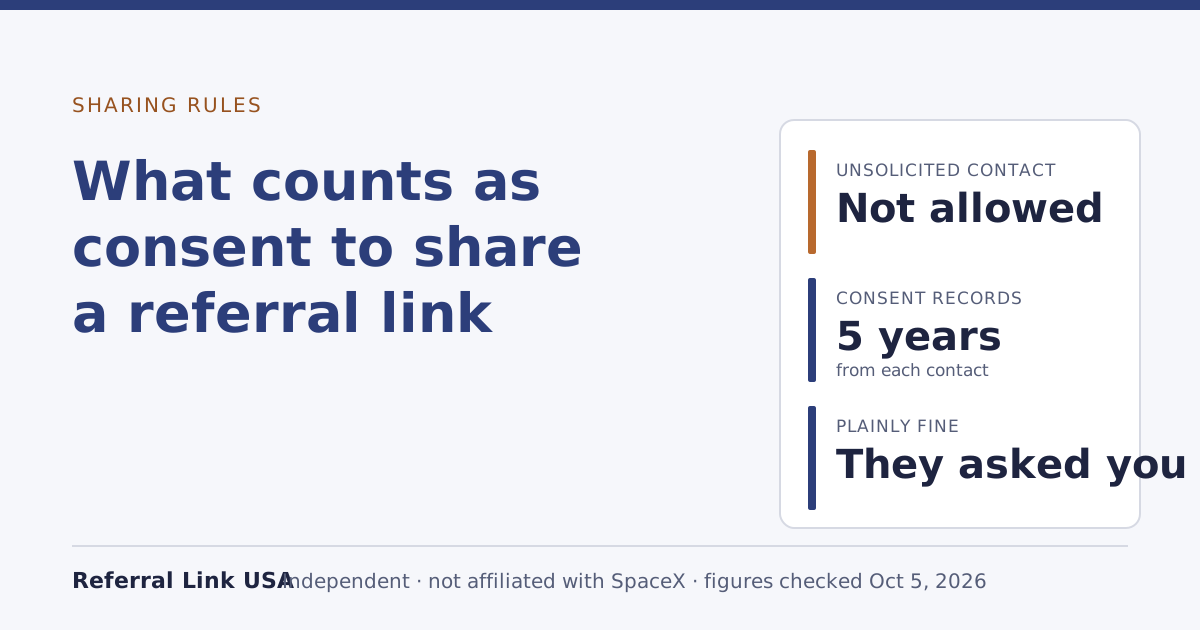
- Contact anyone who hasn’t asked. The rule: no unsolicited contact of any kind; keep consent records for five years.
- Run ads. No paid ads that send traffic to a referral link, directly or indirectly, and no bidding on Starlink or SpaceX terms. That includes boosted posts.
- Use Starlink’s name or logo in your own materials without written consent.
- Present yourself as connected to Starlink, or sell, quote or take payment on its behalf.
- Use extra accounts or other ways around eligibility.
The site’s sharing rules page checks common methods one by one. The short version: sending your link to someone who asked for it is plainly fine. Posting it in forums, groups, comment threads or DMs to strangers, flyers, link-exchange sites and coupon listings are not. A link on your own website is in risky territory.
The terms also describe the whole arrangement in a way that matters here: “Participation is voluntary and occasional.” Our reading: SpaceX expects referrals to come from customers who are asked, occasionally, by people they know, not from a referral operation.
What a realistic year looks like
Think about who actually asks you. A neighbor who sees the dish. A relative whose rural cable just got worse. A coworker planning a cabin. For most owners that’s somewhere between zero and a handful of people a year, and not all of them will order, qualify and stay.
Three illustrations, not predictions:
- One matured referral: $100, roughly two months off a $55 plan.
- Three: $300, roughly a quarter to half a year of service depending on plan.
- Six: $600. Possible for someone in a rural area where everyone asks about the dish, but unusual if you only share when asked.
Bigger numbers almost always come from methods the terms ban. If a website or video promises “passive income” from Starlink referrals, it’s describing a way to lose your rewards: breaking a sharing rule can mean disqualification and forfeiting pending or issued rewards.
When the numbers get bigger: tax and records
The terms put it this way: rewards come with no tax included or withheld, and the referrer alone decides whether tax is owed and files anything required. The IRS position is that the IRS says all income is taxable unless the law specifically excludes it. Whether referral credit is treated differently from cash isn’t stated anywhere we can find; credit vs cash for tax collects what’s known.
Two IRS reporting thresholds are often quoted. The Form 1099-MISC threshold for prizes, awards and other income paid in 2026 is $2,000; that would be twenty $100 rewards from one payer in a year. The other: Form 1099-K from a payment processor only above $20,000 and more than 200 transactions in a year. A threshold is about whether a form is filed, not whether income is taxable. Neither is a reason to avoid keeping records; records to keep for each referral has a simple log, and the taxes page has the citations. None of this is tax advice.
Is referring worth your time?
Usually yes, in a small way, if people ask you anyway: it costs nothing to send a link to someone who wants one, and their free month doesn’t depend on yours. It’s not worth it if it means pitching friends, posting your link around, or keeping your plan active when you’d otherwise pause just to protect a reward that may never mature. The terms also make you responsible for your own costs: the referrer pays their own costs; SpaceX supplies no materials.
Common mistakes
- Counting orders instead of matured referrals. Only matured ones pay.
- Expecting a free month for yourself. Not since the 2023 program.
- Treating “no cap” as “no limit”. The sharing rules are the limit.
- Pausing your own service with referrals pending. All of them are cancelled.
- Ignoring tax because it’s “only credit”. How credit is treated isn’t stated; keep records either way.
What we don’t know
As of our Oct 5, 2026 check: how many referrals typically mature (Starlink publishes nothing), whether SpaceX applies an internal limit it hasn’t published (the terms reserve broad review powers), and whether a 1099 is issued for referral cash (whether SpaceX or its payment processor issues a Form 1099 for referral cashunverified).
What to do next
- Ready to share with someone who asked? Use a three-sentence explanation that stays accurate, and check what counts as consent.
- Need your link? Find your own link in the app or on the website.
- Want the full owner’s guide? See earning the $100 reward.