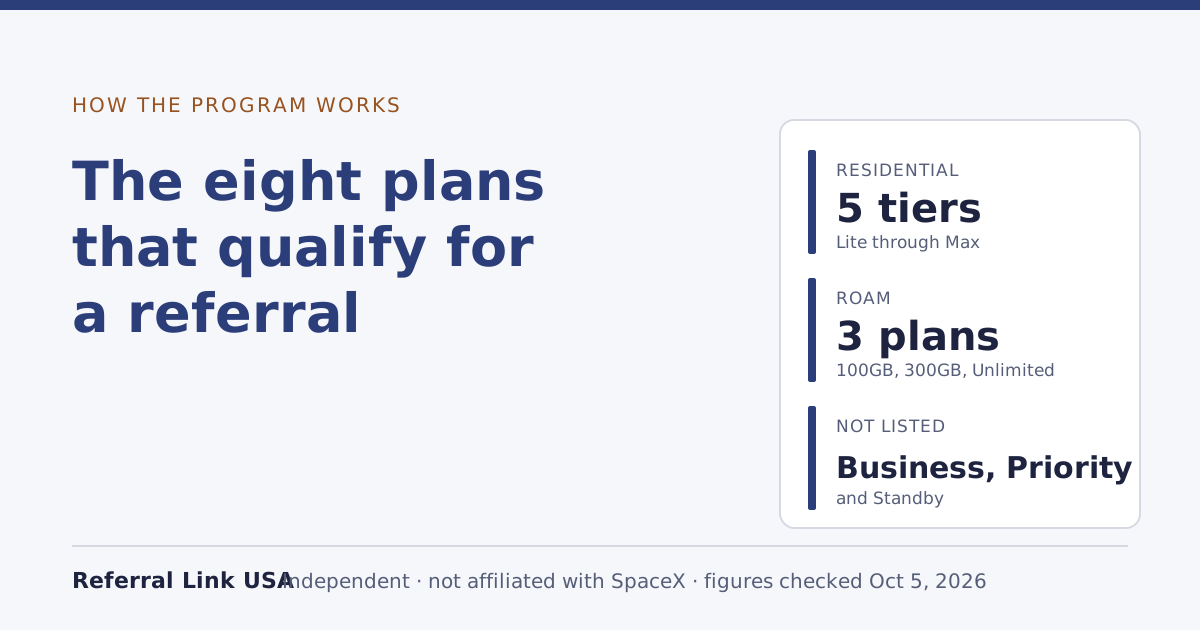
Eight Starlink plans qualify for a referral: five Residential tiers and three Roam plans. Starlink’s help center names them as Residential Lite, Residential, Residential 100 Mbps, Residential 200 Mbps, Residential Max, Roam 100GB, Roam 300GB and Roam Unlimited, and says credits issue only on those. If the plan you’re ordering isn’t on that list (a business plan, a Priority plan, or Standby), a referral link won’t earn anything.
Below is the list with what the free month is worth on each, the plans that are left out, what happens if you switch plans during the qualifying period, and how the list has changed since 2023.
The list, and where it comes from
The list is in Starlink’s help article for people using a referral link (last edited Apr 9, 2026, per Starlink’s own page data):
“Referral credits will only issue on these plans: Residential: Residential Lite, Residential, Residential 100 Mbps, Residential 200 Mbps, Residential Max; Roam: Roam 100GB, Roam 300GB, Roam Unlimited”
The same article’s steps tell new customers to “sign up for Residential or Roam service on starlink.com”. The terms themselves talk about an “eligible service plan” without listing names, so the help center list is the one to go by.
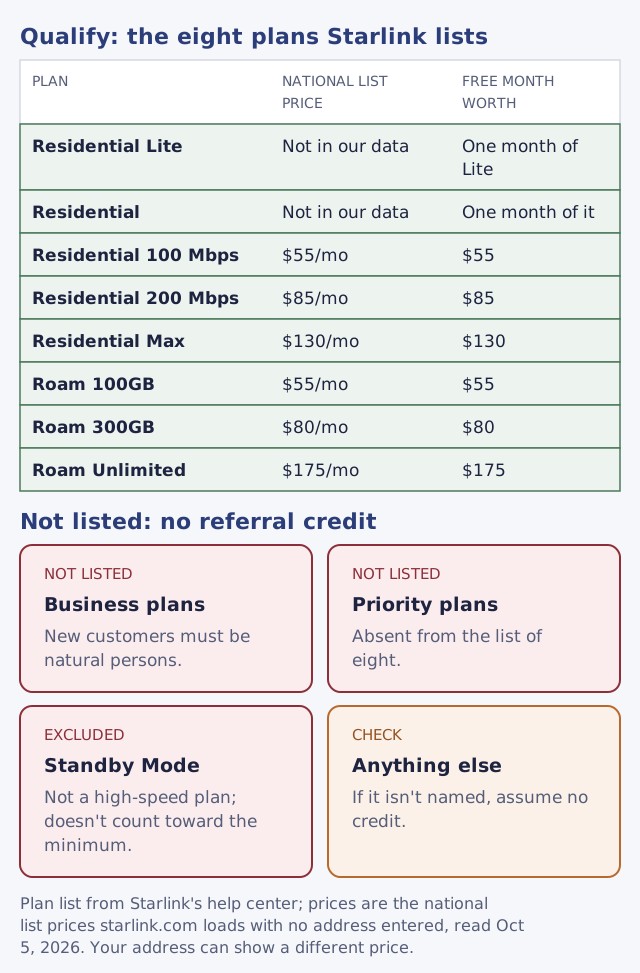
What the free month is worth on each plan
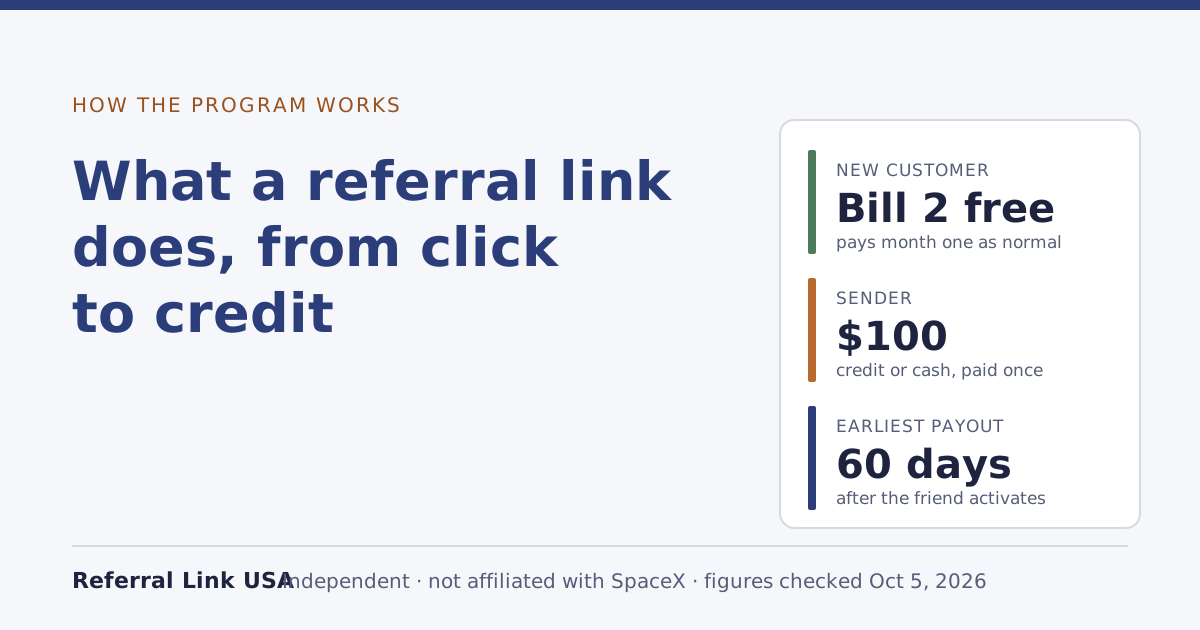
The new customer receives one free month of service on the eligible plan picked at sign-up, credited on the second monthly bill. Because it’s a month of the plan you pick, its value moves with the plan:
| Plan | National list price (read Oct 5, 2026) | Free month worth |
|---|---|---|
| Residential 100 Mbps | $55/mo | one month at that price |
| Residential 200 Mbps | $85/mo | one month at that price |
| Residential Max | $130/mo | one month at that price |
| Roam 100GB | $55/mo | one month at that price |
| Roam 300GB | $80/mo | one month at that price |
| Roam Unlimited | $175/mo | one month at that price |
| Residential Lite, Residential | not in our data file | one month of that plan |
Two notes on those numbers:
- They’re national list prices that starlink.com loads with no address entered. Starlink can show a different price for your address, and checkout is the only number that counts.
- Residential Lite and plain “Residential” are on the referral list, but they weren’t among the Residential prices in the plan data we read on Oct 5, 2026. They may be offered only in some areas or under older names. We don’t publish a price we haven’t read. If checkout offers you one of them, it qualifies.
The free month doesn’t change the kit price, your first month, or any surcharge at checkout. In our reading of the terms, the referral gives no money off the kit, rental activation or any surcharge; it is one month of service creditour reading.
Should the referral change which plan you pick?
No, and it’s worth saying plainly. The free month is one month out of however long you keep the service, so picking a bigger plan to get a bigger credit only makes sense if you’d want that plan anyway.
A worked example at national list prices: on Residential 100 Mbps ($55/mo), twelve months of service is 12 × $55 = $660, and the referral brings the service part of year one to 11 paid months, $605. On Residential Max ($130/mo), twelve months is $1,560 and the credit takes it to $1,430. The credit is larger on Max, but you pay $825 more over the year for it. Pick the plan that fits how you use the internet; the referral follows whatever you choose.
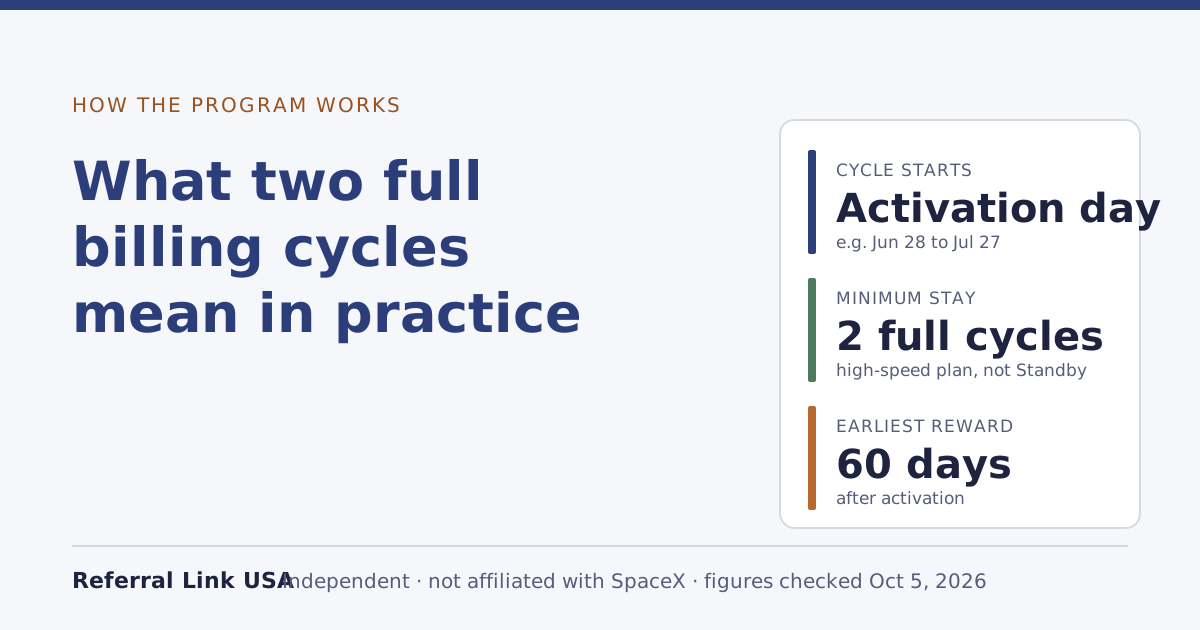
Roam users who travel seasonally have one extra thing to plan for. If you expect to pause between trips, the first two billing cycles still need to be on a high-speed Roam plan for the referral to count for the person who sent you the link. Starting in the off-season and pausing in month two is the most common way that goes wrong.
Does the plan change the sender’s reward?
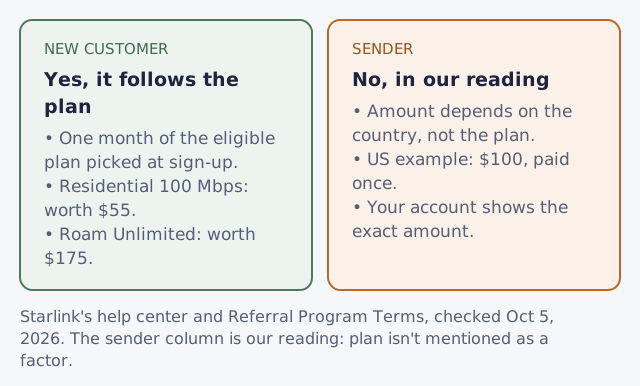
The help center ties the sender’s reward to geography: “The amount depends on the country the person you referred signed up in, and is shown in your account (for example, $100 per successful referral in the US).” Plan isn’t mentioned. Our reading: a friend on Roam 100GB and a friend on Residential Max earn the sender the same $100, and each successful referral pays once.
What the plan does decide for the sender is whether there’s a reward at all. If the new customer signs up on a plan outside the eight, there’s no eligible plan to credit, and nothing for the referral to mature into.
Plans that don’t qualify
Business plans
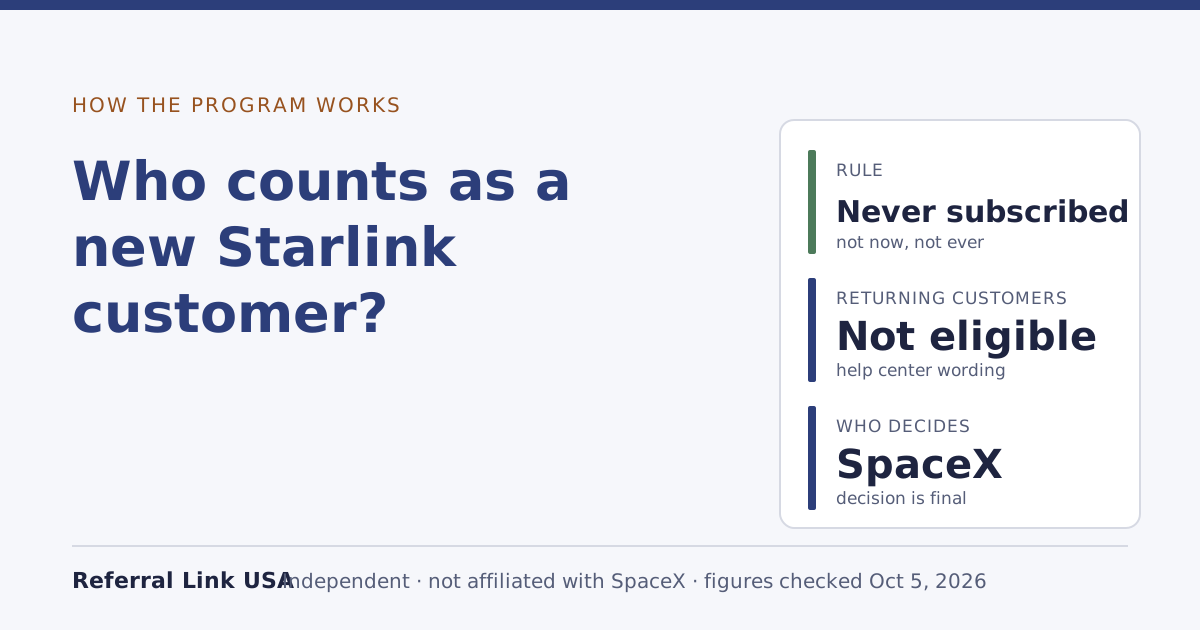
Two rules shut these out. They’re not on the list, and the terms say is a natural person (an individual, not a business). Starlink’s billing FAQ adds that residential accounts are for personal use and can’t carry business tax details. A sole trader who wants service for home use can sign up as a person on a Residential plan; a company can’t be referred.
Priority plans
Not on the list of eight, so no credit. Starlink’s own pausing page mentions Priority as a separate plan family alongside Residential and Roam, which is how we know it exists as a distinct product.
Standby Mode
Standby is a paused state, not a high-speed plan: Standby Mode pauses service for a small monthly fee and does not count as a high-speed plan for the program. The terms require the new customer to stay on a high-speed plan for two full billing cycles, so Standby fails that test even though you’re still a customer. Starting on Standby, or switching to it early, stops the referral from maturing. More in two full billing cycles.
Anything not named
New products and plan names appear over time. If a plan isn’t one of the eight, assume it doesn’t qualify until Starlink’s list says otherwise. We re-read the list on every fact check and log changes on the changelog.
Switching plans during the qualifying period
Starlink doesn’t say anything about plan changes in the referral terms or help pages. What we know from its billing FAQ: upgrades are charged right away, pro-rated for the rest of the period, and downgrades take effect at the end of the current period.
Our reading of how that interacts with the referral:
| Change during the first two cycles | Effect on the referral (our reading) |
|---|---|
| Residential 100 Mbps to Residential Max | Still on an eligible high-speed plan: no effect stated |
| Roam 300GB to Roam 100GB | Still eligible: no effect stated |
| Residential to Roam, or back | Both families are on the list: no effect stated |
| Any plan to Standby | Not a high-speed plan: the referral can’t mature |
| Any plan to a plan outside the eight | No eligible plan: no effect we can rely on, assume it breaks |
What’s not stated: whether the free month is recalculated if you change plans before bill two. The terms say it’s one free month “on the eligible service plan of their selection”, which suggests the plan picked at sign-up. If the exact value matters to you, keep your plan until bill two has posted.
How the list has changed
In the earliest version we can source, from December 2023, the list was much shorter: credits only on Residential and Roam Unlimited (no Priority, no Roam 50GB). The current list adds every Residential tier and the two smaller Roam plans. The changelog dates that change and shows the sources. If you’re reading an older article that says “Roam doesn’t qualify unless it’s Unlimited”, it’s describing the 2023 rules; see why old posts still say “free month for you and them”.
Common mistakes
- Picking a plan before checking the list. Check first; switching later adds questions Starlink doesn’t answer.
- Signing up a business through a personal link. Not eligible on two counts.
- Starting on Standby to save money. The referral can’t mature from a paused line.
- Assuming a bigger plan earns the sender more. It doesn’t, in our reading; it only makes your free month worth more.
- Quoting old Roam rules. All three Roam plans qualify now.
What we don’t know
As of our Oct 5, 2026 check:
- Where Residential Lite and plain “Residential” are sold, and at what national price; our data file has no price for them.
- Whether a plan change before bill two changes the value of the free month.
- Whether Priority customers can refer others. The help center opens referring to customers on an active Residential or Roam plan, which suggests not.
What to do next
- Choosing a plan? Pick any of the eight; then follow what a referral link does, from click to credit.
- Not sure you count as new? Check the never-subscribed rule first.
- Want every condition in one place? The program explainer has them all, the glossary defines Standby, and the home page shows both sides of a referral at a glance.