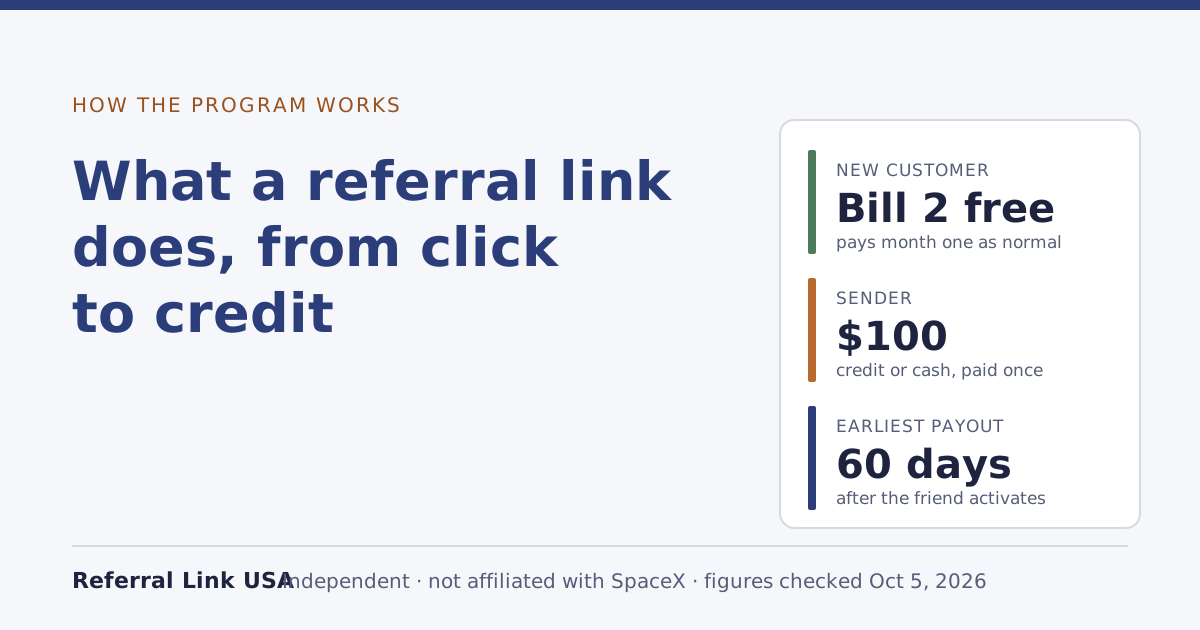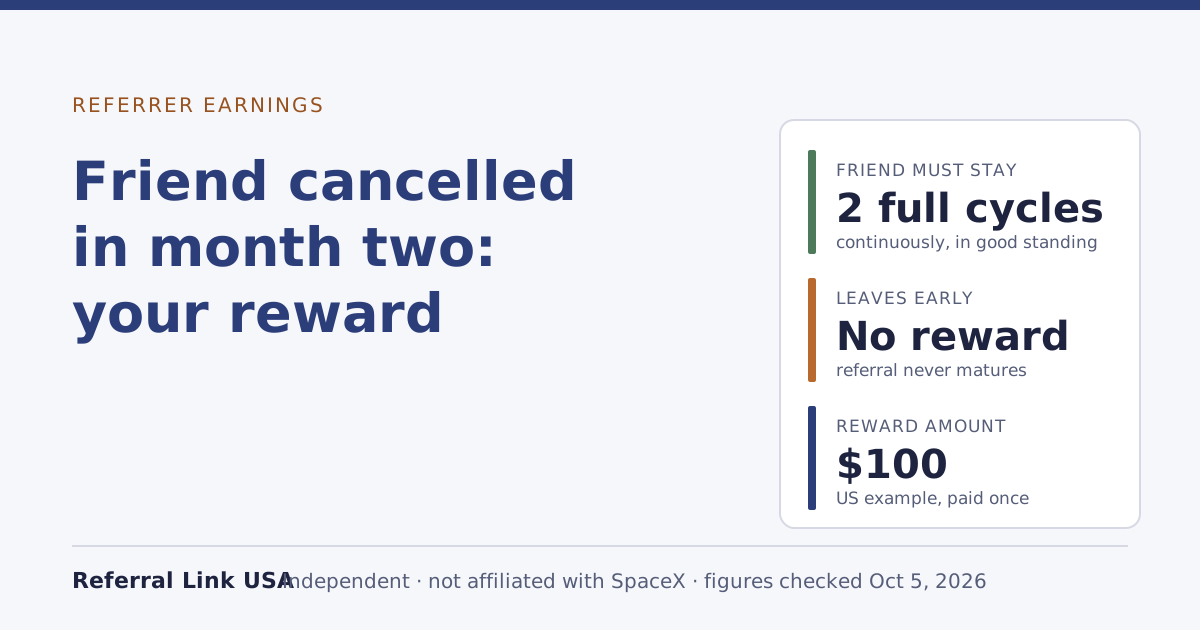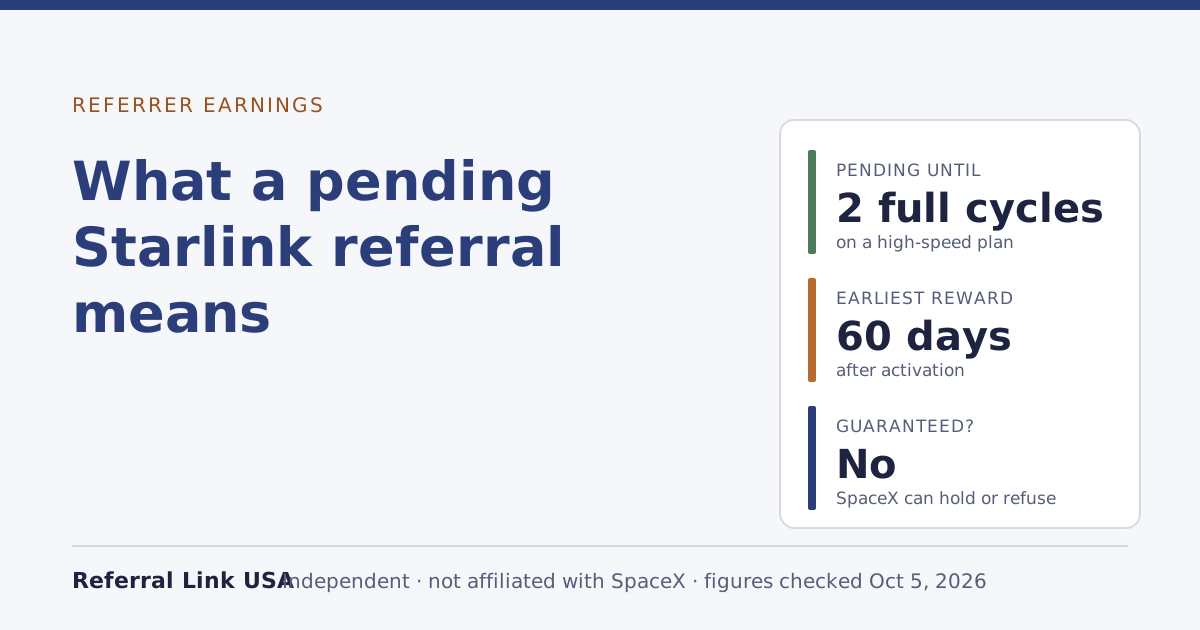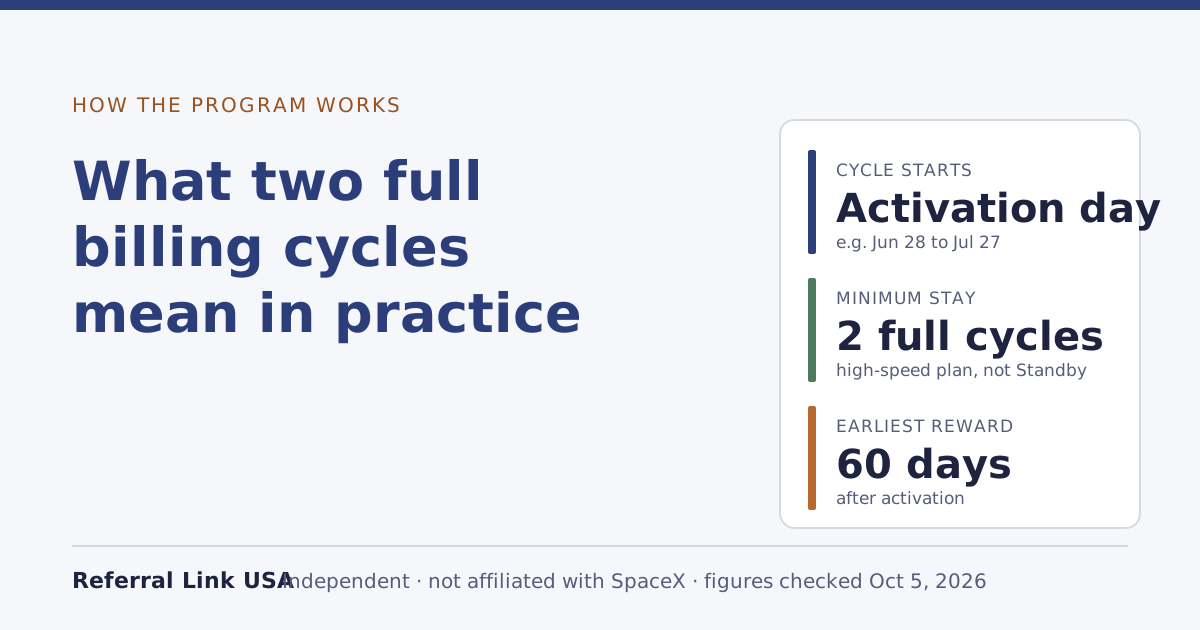
“Two full monthly billing cycles” means two complete billing months, counted from the day your Starlink kit is first activated. Activate on June 28 and your first cycle runs June 28 to July 27, the second July 28 to August 27; the referral can count once August 27 is behind you. Until then you have to stay subscribed, paid up, and on a high-speed plan, not Standby.
The phrase comes from the Referral Program Terms, and it decides whether the person who sent you the link ever gets their reward. Here’s how to work out your own dates, and what can quietly break the count.
The rule, word for word
The terms set the minimum stay like this:
“The Referred Subscriber must maintain continuously subscribed and in good standing for two full monthly billing cycles in order for a Pending Referral to mature to an Eligible Referral.”
The help center says the same in plainer words: “Activate your kit and stay subscribed for at least 2 months.” Our summary of both: the new customer stays on a high-speed plan (not Standby) for two full monthly billing cycles.
Three conditions are packed in there:
- Continuously subscribed. No cancellation and restart in the middle.
- In good standing. Bills paid. A failed payment that isn’t fixed risks this.
- Two full cycles on a high-speed plan. Standby doesn’t count, and the cycles have to be full.
Where your cycles start
Starlink’s billing help page is clear: your billing cycle begins on the day your Starlink kit is first activated. On that day your first invoice appears and your payment method is charged. If you don’t activate, the same page says service is activated automatically 7 days after delivery.
So your cycle date is your activation date. Two details from that page matter for counting:
- Activations on the 29th, 30th or 31st have their billing date moved to the 28th. Count from the 28th.
- Cycles run to the day before. Starlink’s example: a June 28 activation gives a cycle of June 28 to July 27, and the next cycle starts July 28.
You can see your own billing date any time under Billing in your Starlink account, and “Preview Next Invoice” shows what the next bill will hold.
A worked example, day by day
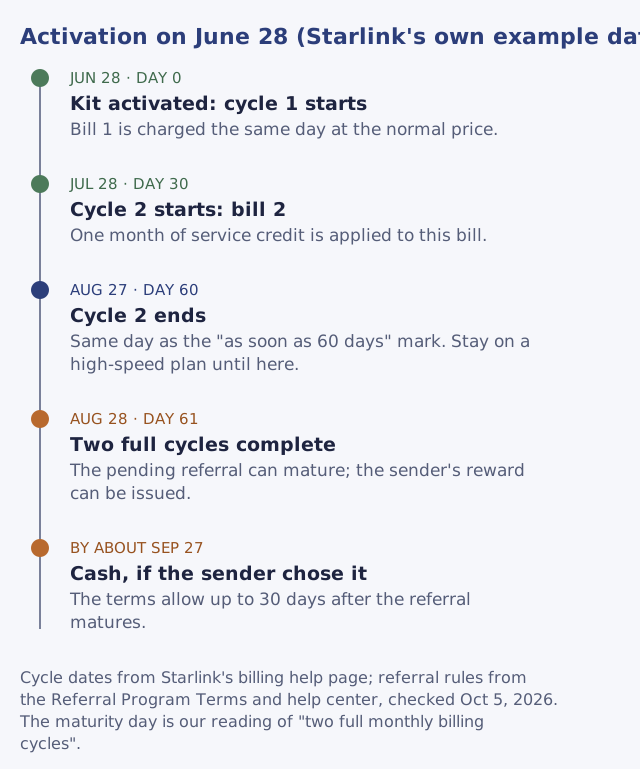
Take Starlink’s own example of a June 28 activation:
| Date | What happens | Whose side |
|---|---|---|
| Jun 28 | Kit activated, cycle 1 starts, bill 1 charged at the normal price | New customer |
| Jul 28 | Cycle 2 starts; bill 2 carries one month of service credit | New customer |
| Aug 27 | Cycle 2 ends; also the 60-day mark | Both |
| Aug 28 | Two full cycles complete: the referral can mature | Sender |
| By about Sep 27 | Latest a cash reward should arrive, if chosen | Sender |
Two things surprise people here.
The free month arrives before the minimum stay ends. The new customer gets one free month of service on the eligible plan picked at sign-up, credited on the second monthly bill. Bill two is issued at the start of cycle two, so on July 28 in the example. The minimum stay doesn’t end until August 27. It’s possible to receive the free month and then leave before the referral counts. The free month doesn’t get clawed back in anything Starlink publishes, but the sender gets nothing.
The 60-day mark and the end of cycle two usually line up. The help center says rewards are issued as soon as 60 days after the friend activates. Sixty days after June 28 is August 27, exactly when cycle two ends. The cycle rule is the real condition; “as soon as 60 days” is Starlink’s shorthand for it.
Your dates, for other activation days
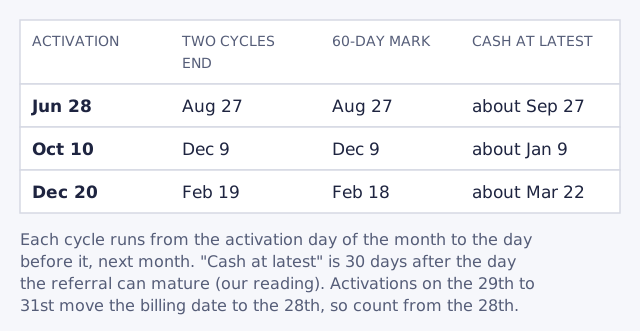
To find your own end date:
- Take your activation date (or the 28th, if you activated on the 29th to 31st).
- Go forward two months to the same day of the month.
- Subtract one day. That’s the last day of cycle two.
For an October 10 activation: two months on is December 10, so cycle two ends December 9. For a December 20 activation: February 20, minus a day, February 19. Notice that in that last case, 60 days after activation is February 18, a day earlier, because January and February together are short. The terms talk about cycles, not days, so the cycle date is the one to trust.
For the sender, cash has its own allowance on top: cash can be paid up to 30 days after the referral matures. Credit simply appears on their next invoice once issued: rewards arrive as service credit unless you choose cash.
What breaks the count
Cancelling
Starlink’s cancellation page says your service “will remain active up until the date paid for, and will be removed from future billing cycles.” So if you click cancel on August 10 in our example, service runs to August 27 and then stops.
Does that count as completing cycle two? Starlink doesn’t say. “Continuously subscribed … for two full monthly billing cycles” could be read either way when a cancellation is pending. Our reading: a cancellation scheduled during cycle two is a real risk to the sender’s reward. If you’re going to cancel, do it after cycle three has started (August 28 or later in the example). You’ll pay for cycle three, so weigh that honestly against the sender’s reward; nobody can make you stay.
Pausing with Standby
Standby is the paused plan: Standby Mode pauses service for a small monthly fee and does not count as a high-speed plan for the program. Starlink’s pausing page says that if you pause before the end of a billing period, you keep service for the rest of that period. But the minimum requires a high-speed plan, so any cycle that starts on Standby doesn’t count. If you switch to Standby at the start of cycle two, the referral can’t mature. Wait until cycle three.
Missing a payment
“In good standing” isn’t defined in the terms. A declined card that you fix quickly may not matter; a suspension for non-payment almost certainly does. Starlink’s billing FAQ says it can’t adjust or delay billing dates, so keep a working card on file through cycle two.
Changing plans
The terms don’t say a plan change resets anything. Starlink’s billing FAQ says upgrades are charged right away on a pro-rated basis, and downgrades take effect at the end of the current period. Our reading: moving between eligible plans, say from Residential to Residential Lite, keeps you on a high-speed plan and shouldn’t break the count. Moving to anything outside the eight, like Standby, does.
Returning the kit
Returning within the 30-day window means cancelling service, so the referral never matures. That’s covered in detail in returned the kit during the trial.
Common mistakes
- Counting from the order date. The clock starts at activation, not when you paid for the kit or when it shipped.
- Treating the free month as the finish line. Bill two arrives a month before the minimum ends.
- Pausing “just for one month” in cycle two. That cycle won’t count.
- Cancelling on the last day of cycle two. Starlink’s help pages say billing is tied to UTC time: changes must be made before 12:00 AM UTC on your billing day, and later changes are delayed until the next billing day. Leave margin.
- Letting a card expire. “Good standing” is part of the rule.
What we don’t know
As of our Oct 5, 2026 check, Starlink doesn’t state:
- Whether a cancellation submitted during cycle two, effective at its end, counts as completing two full cycles.
- How a first cycle is handled when an activation on the 29th to 31st moves the billing date to the 28th.
- Whether a short payment failure that’s cured within days breaks “good standing”.
- How long after maturity a credit reward appears; for cash, the terms allow up to 30 days.
There’s also the wider check that sits on top of the minimum. The terms require the new customer to be actually uses the service and intends to keep it; SpaceX compares retention against the national average. Staying exactly two cycles and leaving is allowed by the wording; it’s also the pattern SpaceX says it reviews.
Who this matters to
- If you’re the new customer: the minimum affects the person who referred you, not your own free month, as long as you reach bill two. The click-to-credit guide shows both sides.
- If you’re the sender: this is why your referral says “pending” for about two months. See what a pending referral means and, if your friend left early, friend cancelled in month two.
What to do next
- Note your activation date the day you set up the dish, and write down the last day of cycle two.
- Keep a working card on file and stay on a Residential or Roam plan until cycle three starts.
- For every rule in one place, see the program explainer; the glossary entry for the minimum subscription has the definition, and the owner’s guide covers the sender’s side.