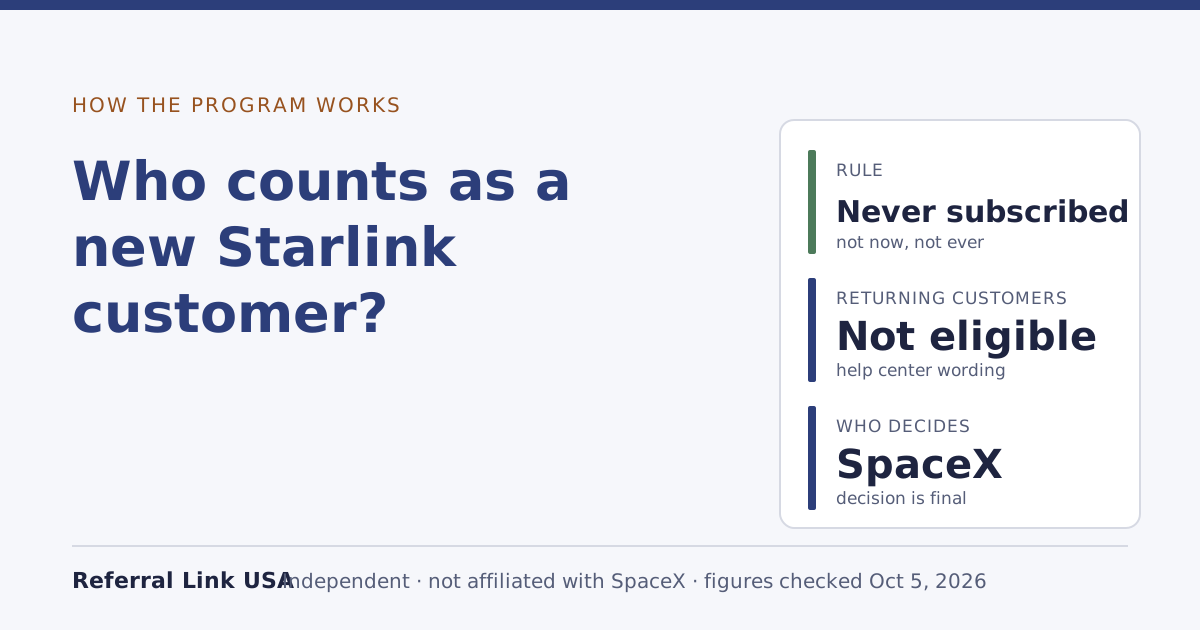
You count as a new Starlink customer only if you have never been a Starlink subscriber, in any form, at any point. The terms say the person ordering has never been a Starlink subscriber, and the help center puts it more bluntly: existing and returning customers are not eligible. If you had Starlink once and cancelled, even years ago, a referral link won’t work for you.
That rule is simple to state and surprisingly easy to trip over. Below are the exact words, a decision tree, and the edge cases people actually run into: returns, moves, second dishes, households and the “just make a new account” idea.
The rule in Starlink’s own words
There are two sources and they agree. The Referral Program Terms (republished Oct 3, 2026) list the conditions a new customer must meet, and the first one is this:
“The Referred Subscriber is not, and has never been, a Starlink subscriber.”
The help article for people using a link says:
“You must be a new Starlink customer. Existing or returning customers are not eligible.”
Two words do the work. “Never” means there’s no expiry: a subscription that ended in 2022 counts just as much as one that ended last month. And “returning” closes the obvious loophole of cancelling and coming back.
Who makes the call? SpaceX alone decides whether a referral counts, and its decision is final. There’s no appeal process described anywhere in the terms.
The decision tree
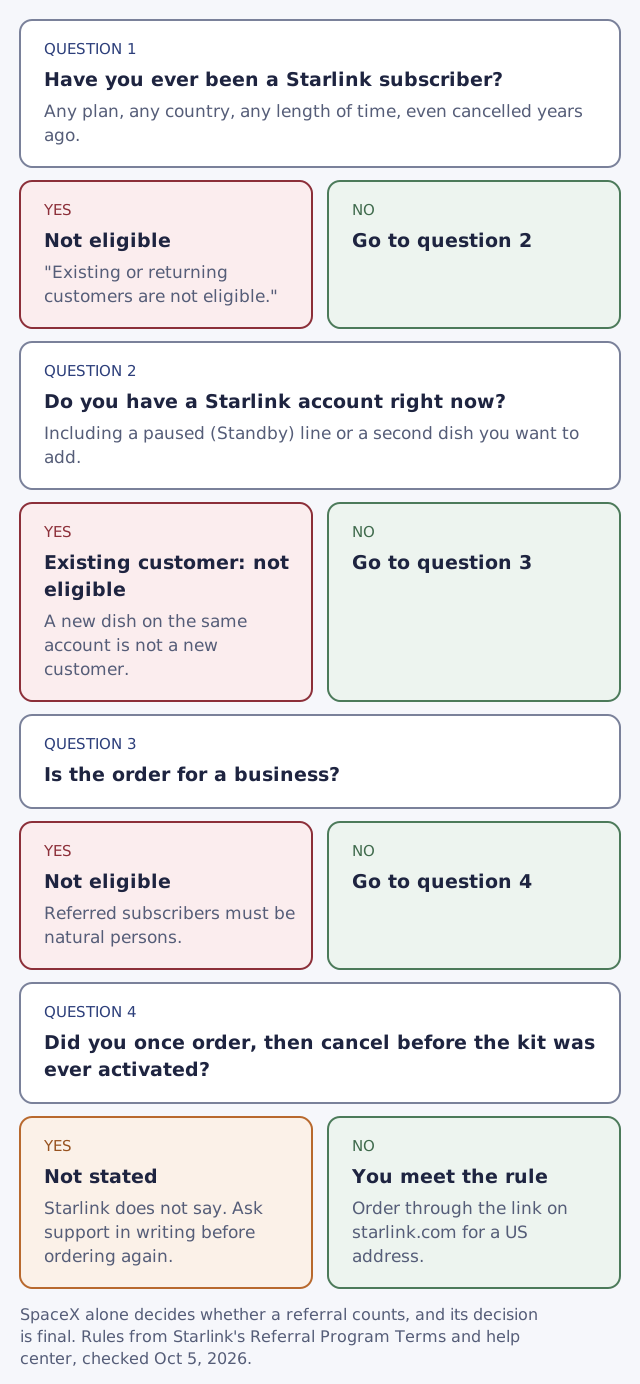
Work through it top to bottom and stop at the first “yes”.
Question 1: have you ever been a Starlink subscriber?
This includes any plan (Residential, Roam, a business plan) and any country. The terms don’t limit “never been a Starlink subscriber” to the US. If the answer is yes, a referral can’t apply, and no amount of time changes that.
Question 2: do you have a Starlink account right now?
If you’re a current customer, you’re an existing customer, full stop. That covers people who want to add a second dish for a cabin or RV: the help center rules out existing customers, and a second kit on your account is still you. It also covers a line paused with Standby. A paused line is still an account. Starlink’s own summary of it: Standby Mode pauses service for a small monthly fee and does not count as a high-speed plan for the program.
Question 3: is the order for a business?
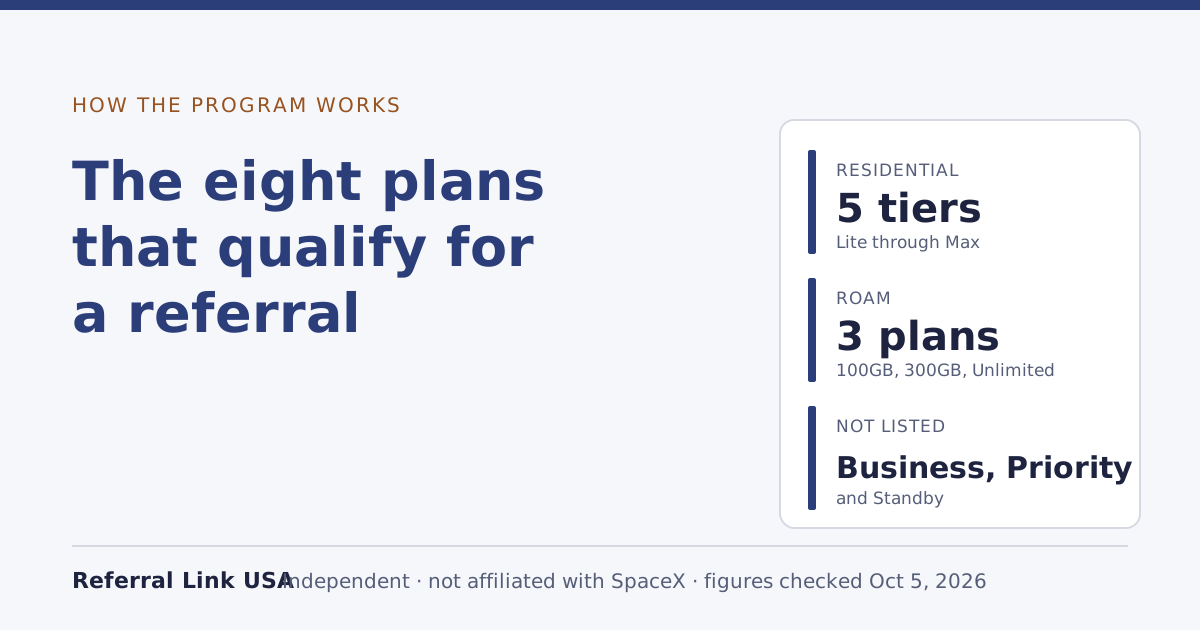
The terms say is a natural person (an individual, not a business). A referral is for a person signing up for themselves, on one of the eight eligible plans, all of them Residential or Roam.
Question 4: did you order once and cancel before activating?
This is the one case Starlink doesn’t settle. The terms talk about having been a “subscriber”, and they don’t define whether an order that was cancelled before the kit was ever activated made you one. We can’t tell you the answer, and neither can anyone else who hasn’t asked Starlink. If this is you, ask support in writing before you order again, and keep the reply.
Edge cases, one by one
You had Starlink years ago
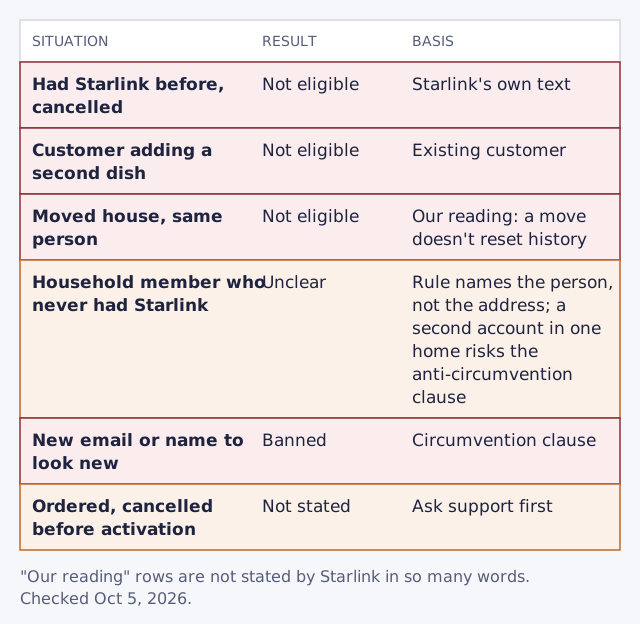
Not eligible. People sometimes assume there’s a cooling-off period, like some phone carriers’ “new line” deals. There isn’t one in the terms or the help center. If you want Starlink again, you order without a referral and pay the normal price.
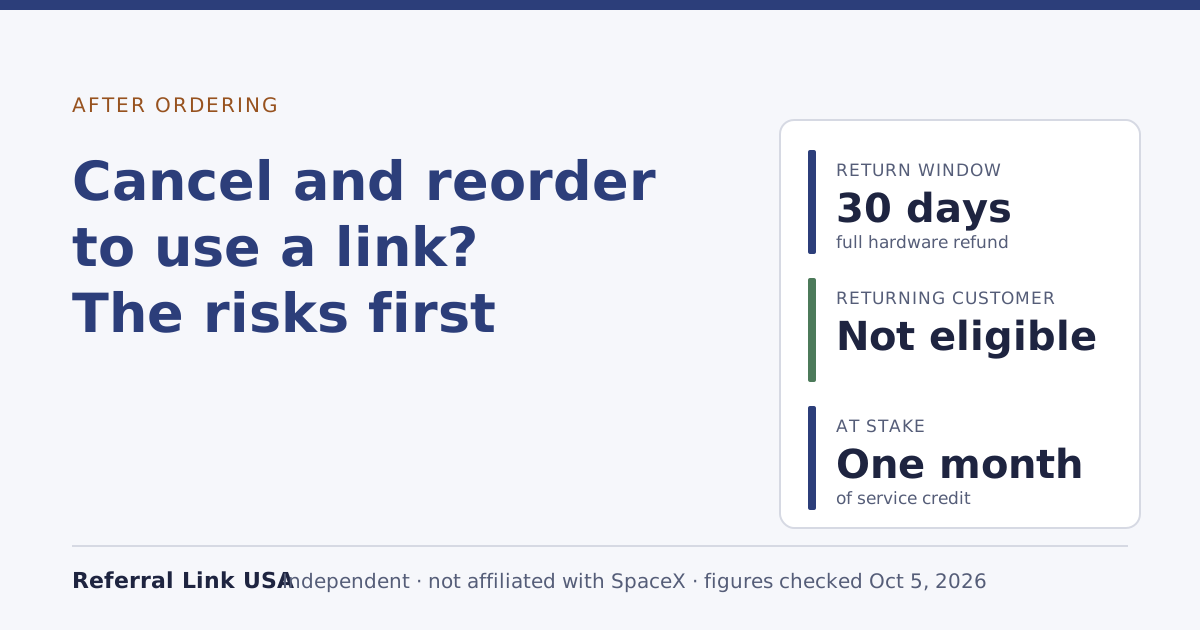
You returned a kit inside the 30-day window
If you activated, you were billed for service. Starlink’s billing help says your billing cycle starts on the day the kit is first activated, and the payment method on file is charged then. In our reading, an activated, billed line is a subscription, so a past in-window return still makes you a former subscriber. The refund doesn’t erase it. If you never activated before returning, see question 4: not stated.
You’re moving house
A move doesn’t make you a new person. If you’re an existing customer moving to a new address, you’re still an existing customer, and in our reading a former customer who moves is still a former customer. The rule asks about you, not about where you live.
The previous occupant had Starlink
The rule is written about the person ordering. Neither the terms nor the help center says anything about addresses that had service before. If you’ve never had an account yourself, a previous occupant’s subscription isn’t listed as a reason to refuse a referral. (A dish left behind by the previous owner is a different problem: a kit not bought on starlink.com can’t earn a referral, because the terms say the new customer buys the kit and plan directly on starlink.com, not at a store, reseller or by private transfer.)
A spouse or roommate who never had Starlink
This is where the terms get thin. The rule names the person, and a household member who has never been a subscriber isn’t excluded by it. But the terms also ban attempts to get around eligibility: the sharing rules say: no extra accounts or other ways around the eligibility rules. If one home already has Starlink and a second account appears there mainly to earn a reward, that’s the pattern the clause describes. Our reading: a household member who genuinely wants their own separate service and pays for it can qualify; a second account opened to collect a free month and a $100 reward is a risk to both people.
Making a new account with a different email or name
Don’t. That’s precisely what the anti-circumvention clause targets, and it doesn’t just risk your free month. The sender certifies every referral: by submitting a referral you certify it meets every eligibility rule. And for the sender, the terms are blunt: breaking a sharing rule can mean disqualification and forfeiting pending or issued rewards. You’d be gambling someone else’s rewards and account standing on a trick that SpaceX says it checks for.
Bought a used dish from a neighbor
A second-hand kit can’t earn a referral at all, whatever your history. The help center is explicit: kits bought from resellers, retailers or through an account transfer don't qualify.
Three worked scenarios
Dana, cancelled in 2023, wants Starlink back. Dana had Residential for eight months, cancelled, and now lives somewhere with no cable. A friend offers a link. Question 1 is “yes”, so the link can’t apply. If Dana orders through it anyway, the order goes through at the normal price, Dana pays every month as usual, and the friend’s referral should never mature. Nobody gains anything, and the friend has certified a referral that didn’t meet the rules. The right move: order without the link.
Luis, a current customer, wants a second dish for a hunting cabin. Question 2 is “yes”. A second kit on Luis’s own account is the same customer. A link from his brother changes nothing about the price, and it can’t earn the brother a reward.
Priya has never had Starlink; her landlord’s previous tenant did. Questions 1 to 3 are “no”, and question 4 doesn’t apply. The address history isn’t part of the rule. Priya meets the never-subscribed condition, so what matters now is the rest of the checklist: order through the link on starlink.com, on an eligible plan, for a US service address, and stay at least two full billing cycles. Two full billing cycles explains exactly when that ends.
Why the rule exists (and why it’s strict)
Starlink doesn’t explain its reasons, so this is our reading. A referral program pays for new customers. A former customer coming back isn’t new demand, and a current customer adding a dish already pays Starlink. The terms back this up in a second rule: the new customer actually uses the service and intends to keep it; SpaceX compares retention against the national average. In other words, accounts that exist only for the reward are something SpaceX says it looks for.
The practical upshot is that eligibility isn’t something to argue after the fact. SpaceX alone decides whether a referral counts, and its decision is final, and the terms describe no appeal.
Common mistakes
- Assuming time resets eligibility. It doesn’t. “Never” means never.
- Using a link for a second dish. You’re an existing customer; it won’t apply.
- Reusing a spouse’s identity or a new email. It’s a breach, and the sender pays for it.
- Thinking a store-bought kit plus a link works. It doesn’t, whatever your history.
- Ordering first and checking later. If you’re unsure about question 4, ask support before you order, not after.
What we don’t know
As of our Oct 5, 2026 check, Starlink doesn’t state:
- Whether an order cancelled before activation makes you a “subscriber”.
- How SpaceX identifies former customers (by name, payment card, address, or something else).
- Whether the rule treats a past business account differently from a past residential one. The wording (“never been a Starlink subscriber”) doesn’t make that distinction, so we’d assume it doesn’t.
If any of these matter to you, ask Starlink support directly and keep the written answer. Remember that only a written waiver from SpaceX counts: a waiver of the terms only counts if it is in writing from a SpaceX representative empowered to give it.
When a referral link is the wrong tool
If you’re a former or current customer, a referral link does nothing for you, and you shouldn’t try to make it work. Order Starlink the normal way. If you already have Starlink and want to help someone else, the right move is the reverse: become the sender. The owner’s guide explains how the reward works from that side, and you can find your own link in a minute.
What to do next
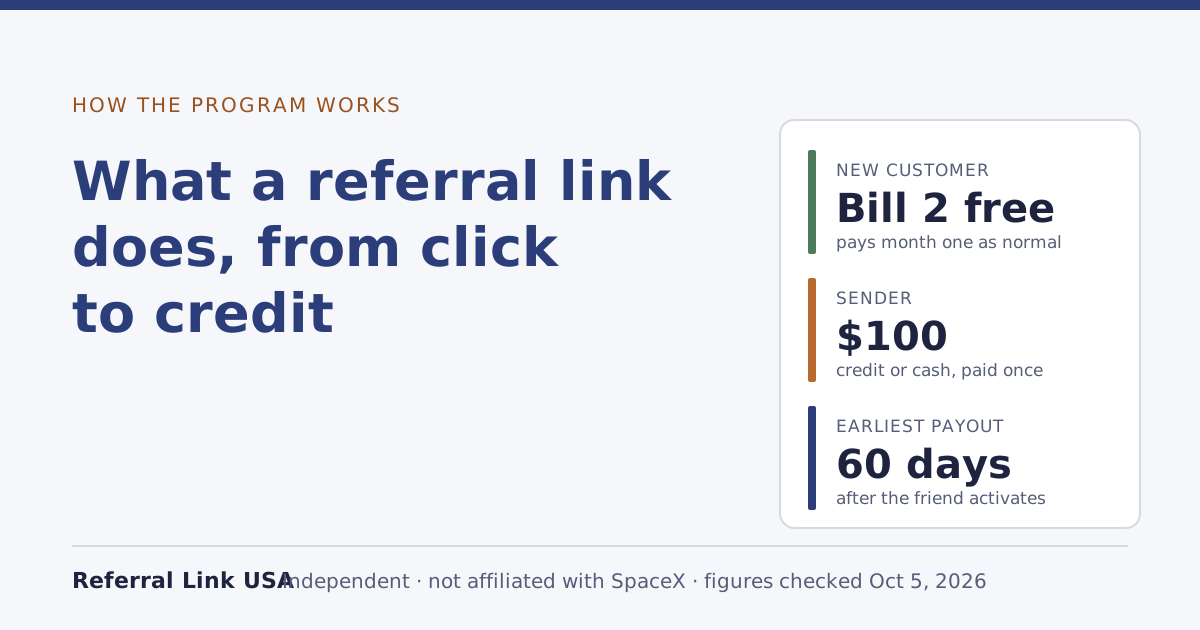
- You’ve never had Starlink? You meet the rule. Check that your plan is one of the eight eligible plans, then follow what a referral link does, from click to credit.
- You already ordered without a link? Read after ordering before considering a cancel-and-reorder, and see the risks of cancelling and reordering.
- You want the full rule set? The program explainer lists every condition with its source, and the glossary defines the terms used here.