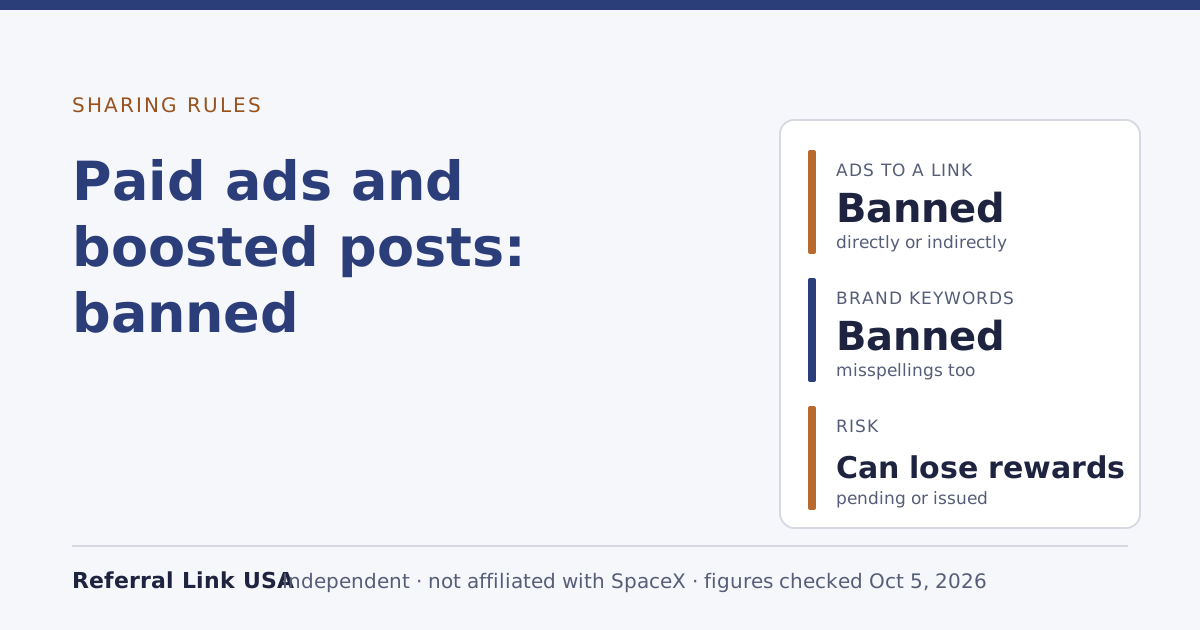
You can’t use paid advertising to promote a Starlink referral link. The US terms ban any paid ad, whether search, social, display, native or similar, that sends traffic to a referral link “directly or indirectly”, and they separately ban bidding on Starlink or SpaceX brand terms, including misspellings, in any paid media. That covers boosted posts, and it covers paying to promote your own page or video that then shows the link. A breach can cost you pending and already-issued rewards.
Below: the clause in full, what each part covers, the workarounds it closes, and why the rule matters even if your ad budget is ten dollars.
The clause
It’s the last item in the list of things referrers must not do, in section 6 of the terms:
“Purhase, place, or otherwise run paid advertising (including search, social, display, native, or similar) that directs traffic, directly or indirectly, to a referral link; or bid, or use in paid media, Starlink, SpaceX, or related brand terms, including misspellings and close variants.”
It has two halves, and they work independently.
Half one: ads that lead to a link. Any paid placement whose job is to send people, by any route, to a referral link. The list in brackets is illustrative, and “or similar” makes it open-ended.
Half two: brand terms in paid media. Bidding on “Starlink”, “SpaceX”, “Star link” or “starlnk” as keywords, or putting those words in paid media, is banned whether or not a link is involved.
What counts, sorted
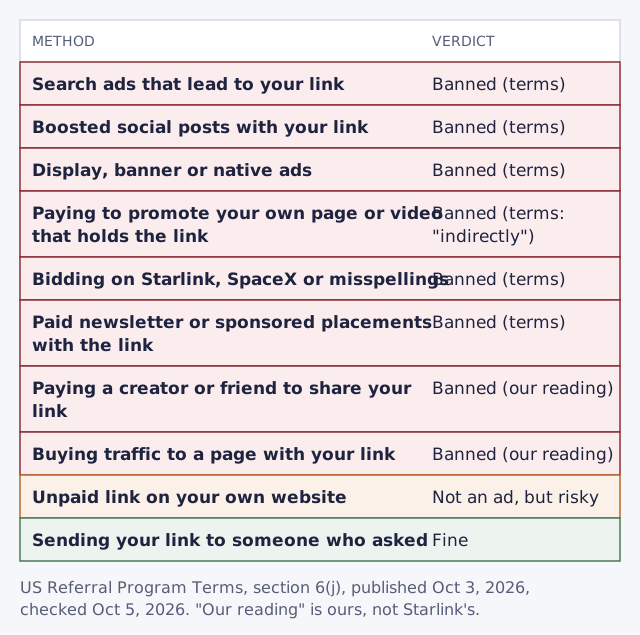
The workarounds it closes
“The ad doesn’t link to Starlink, it links to my page”
This is what “directly or indirectly” is for. If you pay to promote a blog post, a video or a landing page, and that page carries your referral link, the paid traffic reaches the link indirectly. That’s inside the ban.
“I only boosted a normal post”
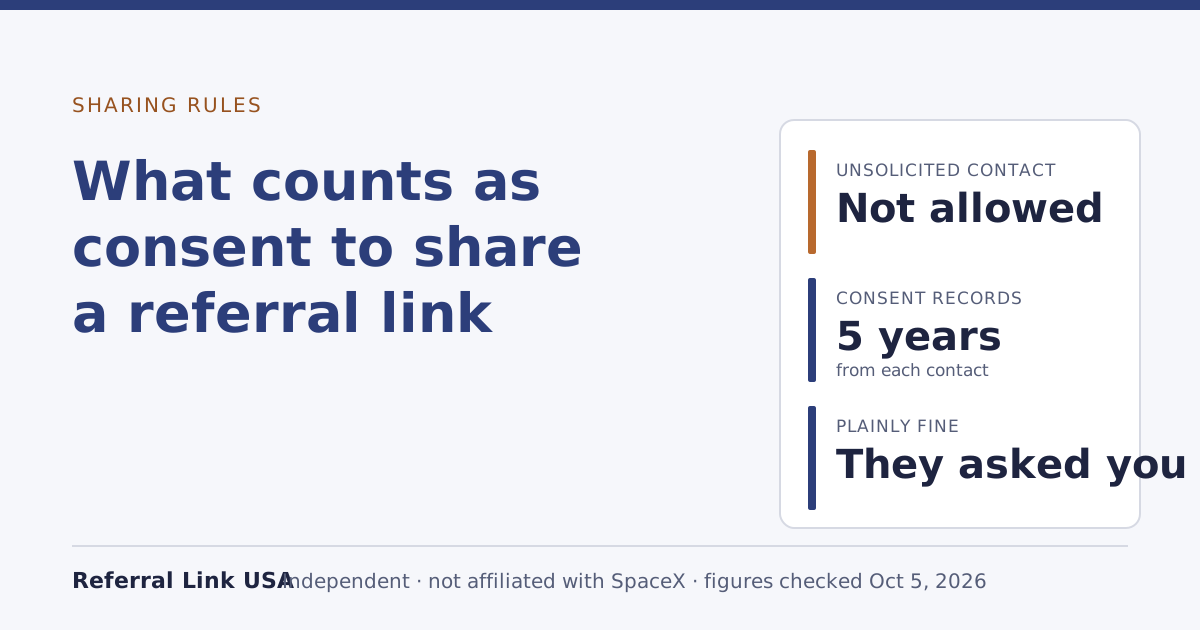
A boosted post is a paid social ad. The clause names social advertising specifically. Boosting also shows your link to people who never asked for it, which runs into a second rule: no unsolicited contact of any kind; keep consent records for five years.
“I didn’t use the word Starlink in the ad”
That avoids half two but not half one. If the ad sends traffic to your link, by any route, it’s banned regardless of the wording.
“I’m bidding on a misspelling, not the brand”
The clause covers “misspellings and close variants” explicitly.
“Someone else ran the ad for me”
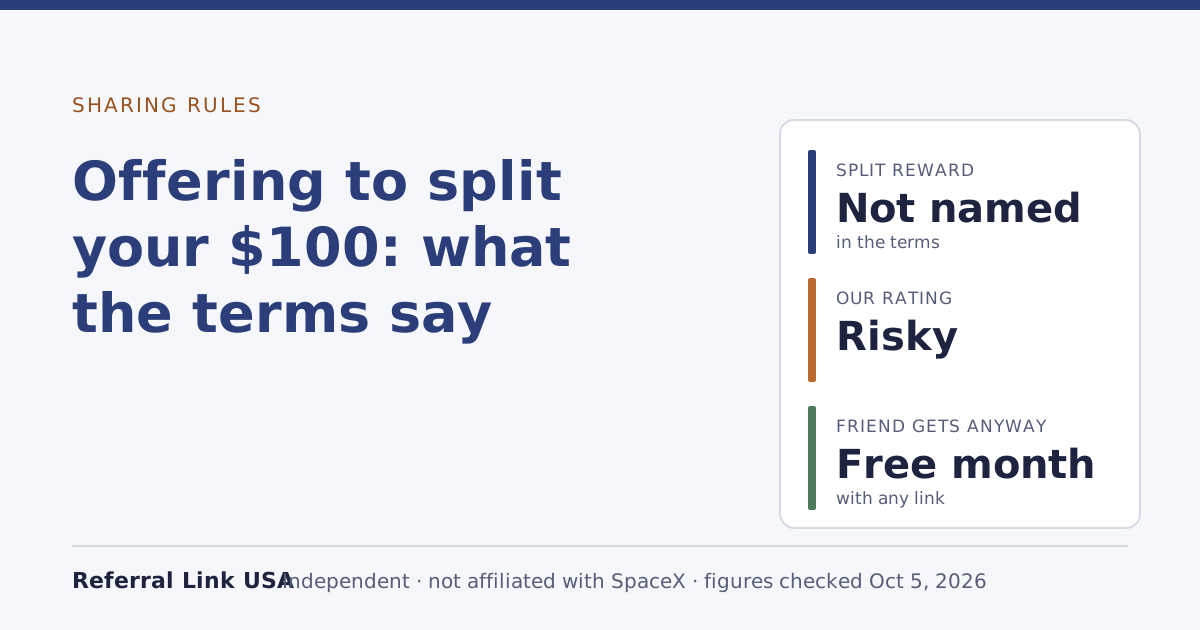
The terms don’t say whose card pays. In our reading, paying someone to run or share an ad for your link is you placing paid advertising through them. The sharing section also says no selling, negotiating or taking payment on SpaceX's behalf, and the ban on no extra accounts or other ways around the eligibility rules shows how the terms treat indirect routes in general.
Why such a strict rule
Starlink doesn’t explain its reasons in the terms. Three readings fit the rest of the document:
- The terms describe referrals as personal. The terms describe participation as voluntary and occasional, and the referrer decides whether, when and how to share the link. Paid traffic is the opposite of occasional sharing.
- Brand searches are Starlink’s own. Someone typing “Starlink” into a search engine is already looking for Starlink. Paying to intercept that search with a referral link earns a reward for a customer who was coming anyway.
- Ads reach people who didn’t ask. That’s the same problem as unsolicited contact, at scale.
What breaking it can cost
The consequences for any breach of section 6 are written into the same section: breaking a sharing rule can mean disqualification and forfeiting pending or issued rewards. Separately, a reward can be limited, delayed or revoked, even after it's issued, for fraud, abuse or a terms violation.
Note the word “issued”. A paid ad that brought in referrals months ago can still cost you those rewards if SpaceX finds it later. And answer any SpaceX information request within 24 hours (or the deadline it gives), so you may be asked directly how a referral found your link.
The maths rarely works anyway. Each successful referral pays $100, only once the new customer has stayed two full billing cycles, and a pending referral is not guaranteed to pay; SpaceX can hold a reward while it checks eligibility. Even before the rule, paying per click to chase a reward that might not arrive is a poor bet.
What is fine
- Sending your link to someone who asked. This is the one method we present as plainly fine.
- Showing your link or QR code in person to someone who wants it.
- Talking about Starlink without your link. You can answer questions anywhere, in your own words, with no link and no money spent.
A link on your own unpaid website is a different question. It isn’t an ad, but it can still break other rules, such as using Starlink’s name or reaching people who didn’t ask. Our sharing rules page gives that method a “risky” verdict, with reasons.
If you hoped to earn more than occasionally
Some owners look at $100 a referral and think of it as a side business, which is where ads usually come in. The terms push against that reading in several places: the terms describe participation as voluntary and occasional, there’s no cap stated but no tools or materials either, and the referrer pays their own costs; SpaceX supplies no materials. Without paid promotion, the realistic ceiling is the number of people who ask you. Our guide to how much you can realistically earn works through the numbers honestly.
How this site handles it
This site carries a referral link too, and the same rule applies to us. We don’t run paid ads, boost posts or bid on any search term. The how we make money page explains exactly how the link here works and what we’d earn.
Examples, sorted by risk
These hypothetical cases show how the clause applies in practice.
- The weekend boost. An owner posts a photo of their dish with “Ask me for my referral link” and pays a few dollars to boost it to local users. The post doesn’t contain the link itself, but its purpose is to bring people to the link. Our reading: banned, because the paid post directs traffic to the link indirectly, and it reaches people who never asked.
- The review channel. A creator reviews Starlink on video and puts their referral link in the description. Unpaid, that’s a link on their own channel, which carries the “risky” verdict for other reasons. The moment they pay to promote the video, it’s paid advertising that sends traffic to a referral link. Banned.
- The keyword test. An owner with a small website buys search ads on “starlink setup help” pointing to a how-to page with no referral link anywhere. Half one of the clause doesn’t apply, since no link is involved. Half two does: “Starlink” is a brand term used in paid media. Banned.
- The friend who asked. A colleague asks for the link over lunch, and the owner texts it to them. No money spent, no audience, consent given. Fine.
What to do if you already ran an ad
Stop it now and remove any promoted posts that carry or point to your link. Don’t try to hide it: if SpaceX asks, answer any SpaceX information request within 24 hours (or the deadline it gives), and a truthful short answer is better than a discovered omission. Rewards already issued may still be at risk, so don’t count on them until the referral matures and pays. From here on, share only with people who ask.
Common mistakes
- Thinking a small budget doesn’t count. There’s no minimum in the clause.
- Boosting a post “for reach” with the link in a comment. The paid post still sends traffic to the link indirectly.
- Promoting a video that mentions your link in the description. Same problem.
- Bidding on a brand misspelling. Named in the clause.
- Assuming old referrals are safe. Issued rewards can be forfeited too.
- Paying a friend or creator to share your link. Our reading: still paid promotion.
What we don’t know
As of our Oct 5, 2026 check, Starlink doesn’t state:
- How it detects paid traffic to referral links.
- Whether a single small breach is treated the same as a large campaign.
- Whether there’s any review after disqualification. The terms describe no appeal, and SpaceX alone decides whether a referral counts, and its decision is final.
We’ll update this guide if Starlink publishes guidance. Any change to the clause will appear in our changelog.
What to do next
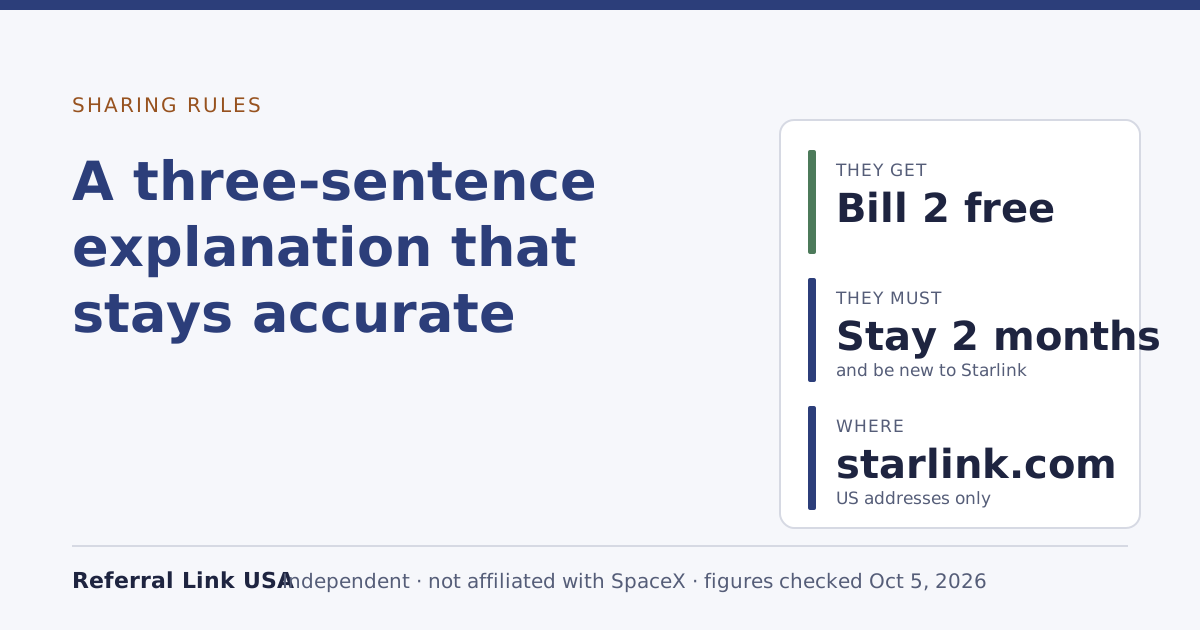
- Want to share safely? Use a three-sentence explanation that stays accurate with someone who asked.
- Unsure what counts as asking? Read what counts as consent.
- Checking every rule at once? The sharing rules cover all ten.
- Keeping records? The owner’s guide links the templates.